What this service covers
Protect pressure and water quality from meter to fixture.
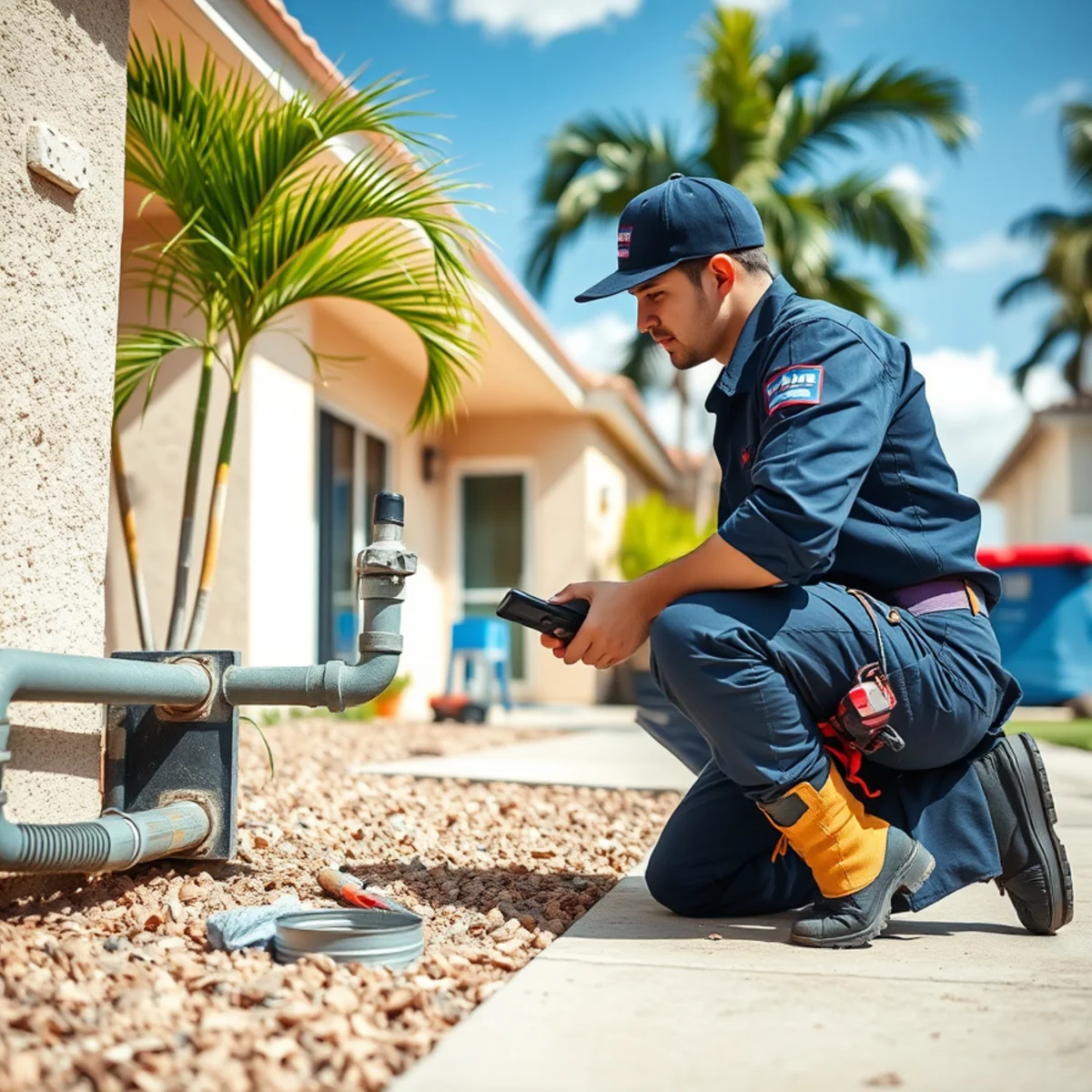
Miami water services may cross coral rock, mature roots, pavers, driveways, landscaped yards, or long commercial sites. High groundwater can complicate excavation, while coastal exposure can affect above-grade fittings. The wettest spot is not always directly above the break.
Signs it is time to request water lines
The pattern, timing, and number of affected fixtures often tell more than the loudest symptom. These signs are reasons to schedule diagnosis, not proof that the most expensive repair is necessary.
- The meter moves while every fixture is off
- Pressure drops across the property
- A wet area develops between meter and building
- Water appears rusty or contains recurring debris
- An exterior service has repeated leaks
How BH Plumbing & Drain Service approaches the work
Each appointment moves from protection and diagnosis to an approved scope, completed work, and verification. The exact equipment and tests change with the system, but the decision path remains clear.
Listen and protect the work area
We start with the symptoms you have noticed, protect nearby floors and finishes, and identify any immediate shutoff or containment step.
Confirm the ownership boundary and locate the affected water line
The technician checks the accessible system, tests the likely causes, and explains what the evidence shows before recommending work.
Repair, reroute, or replace the approved section and pressure-test
After you approve the written scope, the repair or installation is completed with attention to clean connections, safe operation, and the surrounding property.
Verify and explain
We operate the system, check for leaks or restored flow, clean the work area, and explain practical steps that may help prevent a repeat problem.
How do I know whether the leak is mine or the utility’s?
Responsibility usually changes at a defined meter or service point, but the exact boundary varies by utility and property. Meter behavior, valve isolation, and utility confirmation help determine which side needs service.
Do not excavate near a meter or public main without utility locating and authorization. Condo and commercial campuses may also have private master-meter systems.
Can an underground water line be repaired in one spot?
Yes, when the failure is localized and the surrounding pipe is sound. Repeated breaks, widespread deterioration, poor material, inadequate sizing, or an inaccessible route may support replacement instead.
A spot repair should use approved fittings, bedding, depth, restraint, and testing. The proposal should state how the line will be protected before backfill.
Why is my whole-house water pressure low?
Possible causes include a utility condition, partially closed valve, failing regulator, clogged filter, undersized or corroded service, hidden leak, or high simultaneous demand. Pressure should be measured at useful points before replacing pipe.
Static pressure and flow under demand reveal different problems. One weak faucet is more likely a fixture-specific restriction.
Which water line and authority are responsible for the problem?
A water-line scope begins by identifying the line and control point: public main or utility service, meter box, customer-side service, building distribution, irrigation, pool, fire protection, or a shared condo or campus system. The serving utility, approved plans, meter arrangement and property documents—not simply the wet ground—establish who may isolate, repair and reconnect it.
For a typical Miami-Dade WASD account, the Department describes its maintenance boundary through the meter box and assigns consumption past the meter to the account holder. That general boundary does not answer every site: another utility, municipality, private master meter, submeter, easement, development agreement, association declaration or commercial campus can divide ownership differently. Map the public main and utility connection separately from the private water service between the meter and building entrance, then distinguish the main shutoff, regulator, backflow device where applicable, domestic distribution, hot and cold branches, risers and pressure zones. Irrigation, pool makeup, fire service and process-water piping can share a property while using different meters, valves, hazards, permits and authorized contractors. A low reading in one unit can originate at a fixture stop, shared riser, booster or building control rather than the buried service. A public leak, damaged meter box or connection inside the right-of-way requires utility direction; private work must not disturb a utility valve, main, meter or sealed connection without authorization. The field record should name the meter/account observed, line endpoints, fixtures or buildings served, valve authority, easement or common-property question and systems excluded before a private repair proposal is issued.
What do meter, isolation, pressure, flow, and route evidence actually show?
A controlled no-use meter observation can show registered flow, valve isolation can narrow a boundary, and static versus flowing pressure can separate supply pressure from restriction or demand. Acoustic response, plans, tracer information and careful exposure can refine the route. None of those findings alone establishes an exact break, private responsibility, pipe material or the condition of the whole service.
List every intentional consumer before a meter test: toilets, appliances, treatment equipment, irrigation, pool fill, cooling or process makeup, recirculation and other units on a master meter can create legitimate flow. Record the test interval and meter register rather than relying only on a momentary indicator. Operate only known, functional and authorized private valves. If the building valve closes reliably and the meter still advances, loss may be on the customer-side exterior service or another connection between those points; if movement stops, investigate the building side and known consumers. A passing valve, check valve, regulator or unrecognized branch can make that conclusion incomplete. Static pressure measures the system at rest; residual or dynamic pressure while a controlled demand flows helps reveal restriction, inadequate supply, undersizing or regulator behavior. One weak fixture is more likely local than a service failure. Acoustic tools can support pressurized loss, but pipe material, pressure, depth, coral rock, wet soil, traffic and pumps affect sound location. Utility records, surveys, tracer wire, prior repairs and entry points inform the assumed route, yet remodels and undocumented private lines can differ. Public 811 marks are essential inputs but may not include every private irrigation, pool, lighting, drain or campus facility. Test pits or safe exposure may be needed before the route and repair boundary are final.
When should a water service receive a spot repair, sectional replacement, reroute, trench, or bore?
A spot repair can fit one confirmed defect when adjacent pipe and joints are serviceable. Sectional replacement can address repeated defects or a compromised run between defined endpoints, while rerouting can avoid an unsuitable corridor. Open trench and directional boring are access methods, not automatic upgrades; utilities, easements, foundations, soil, groundwater, route control, approvals and restoration determine feasibility.
Compare the failure type, pipe material and rating, diameter, service demand, pressure, route, joint history, prior repairs, visible condition and consequence of another opening. A repair coupling or short replacement must be approved for the exact pipe, pressure, burial and transition and leave sound support on both sides. Broader replacement needs evidence such as distributed deterioration, several failures along the defined service, inadequate size, prohibited or unsuitable material, an unserviceable route or repeated access economics; age or one wet area is not enough. A reroute still needs a legal connection point, required separation, cover or protection, sleeves where required, support at entry, restraint, serviceability and correct abandonment of the old line. For open excavation, identify public and private underground facilities, preserve 811 marks, safely expose conflicts, evaluate coral rock or fill, high groundwater, dewatering, trench stability, adjacent foundations, roots, driveways, sidewalks and traffic. A directional bore needs verified entry and exit pits, route depth and steering tolerance, potholing at crossings, space for equipment and bend limits, compatible pipe/joints, right-of-way and easement authority, and a plan for drilling fluid, obstructions and a failed bore. Boring does not eliminate excavation or utility risk and should not be promised before approvals and subsurface constraints are known.
How are materials, permits, testing, flushing, pricing, restoration, and closeout verified?
The approved scope should specify service, diameter, pressure, material standard, current product listing, fittings and transitions, burial/protection, valves, backflow where applicable, permit authority, utility connection, test and inspection. Pricing follows length, depth, route, access, rock, groundwater, pavement, coordination and restoration. Closeout verifies the installed segment without certifying every concealed pipe or the water system beyond the work.
Material selection is application-specific. Copper tube, pressure-rated PVC, CPVC and PEX products follow different ASTM and manufacturer requirements for pressure, temperature, dimensions, joining, burial, ultraviolet or chemical exposure and mechanical protection. Florida’s plumbing code requires qualifying water-service products to meet the applicable standards and NSF requirements; NSF/ANSI 61 addresses health effects from exact drinking-water-contact products, while NSF/ANSI/CAN 372 addresses product lead content. Neither label is a blanket performance, taste, odor, system-condition or water-quality certification. Verify the actual pipe, fitting, valve, coupling, gasket, solvent, insert, transition and listing for the service. The installation plan should address approved joints, corrosion or permeation exposure, bedding, cover/depth or equivalent protection, sleeves at penetrations, support and restraint, tracer requirements, entrance valve, regulator and cross-connection/backflow protection only where the connection and authority require them. Confirm the exact address, municipality or unincorporated jurisdiction, plumbing permit, utility application, meter appointment, right-of-way or driveway/sidewalk approval, easement and inspection-before-cover stage. Pressure or leak testing follows the adopted code, approved plans and product instructions. Flush disturbed piping as required; disinfect and sample only when the code, utility, approved project or authority requires a defined procedure—do not invent a universal treatment or call a plumbing test proof of water quality. The estimate should separate diagnosis, locating, permits, utility charges, excavation or boring, pipe and fittings, dewatering, traffic/property protection, testing, inspections, paving, concrete, pavers, landscaping and building-finish restoration. Closeout records endpoints, route, depth/protection where documented, materials, valves, test conditions/results, flushing or required disinfection record, inspections, meter/pressure/flow recheck, open exclusions, as-built information and restoration ownership.
What affects the estimate?
A responsible estimate reflects the condition, access, materials, equipment, permit path, and restoration—not just the service name. BH Plumbing & Drain Service does not publish a fake range that could exclude the work needed at your property.
- Customer-side versus utility-side responsibility
- Line length, depth, diameter, and material
- Driveway, paving, roots, landscaping, or building access
- Directional routing versus open excavation where feasible
- Permits, backflow, meter coordination, testing, and restoration
Miami-specific planning for water lines
Miami water services may cross coral rock, mature roots, pavers, driveways, landscaped yards, or long commercial sites. High groundwater can complicate excavation, while coastal exposure can affect above-grade fittings. The wettest spot is not always directly above the break.
Properties inside Miami-Dade’s 34 municipalities may use a city building department, while unincorporated parcels generally use County permitting. Condos can add management approval, service-elevator rules, vendor documents, unit protection, and shared water or drain shutdowns. Those conditions belong in the scope before work starts.
Technical entities you may hear during diagnosis
These terms describe parts, tools, or conditions relevant to this service. The technician should translate them into visible evidence and a practical decision rather than use jargon as a substitute for explanation.
- water service
- meter
- main shutoff
- pressure regulator
- backflow
- copper
- PEX
- PVC
- tracer wire
- pressure test