

What this service covers
Reliable fixtures start with sound valves and connections.
Mineral residue, salt exposure near the coast, imported fixtures, corroded shutoffs, and remodeled cabinets can turn a simple-looking Miami faucet replacement into a connection project. Testing the valves before disconnecting the fixture helps prevent an avoidable building shutdown.
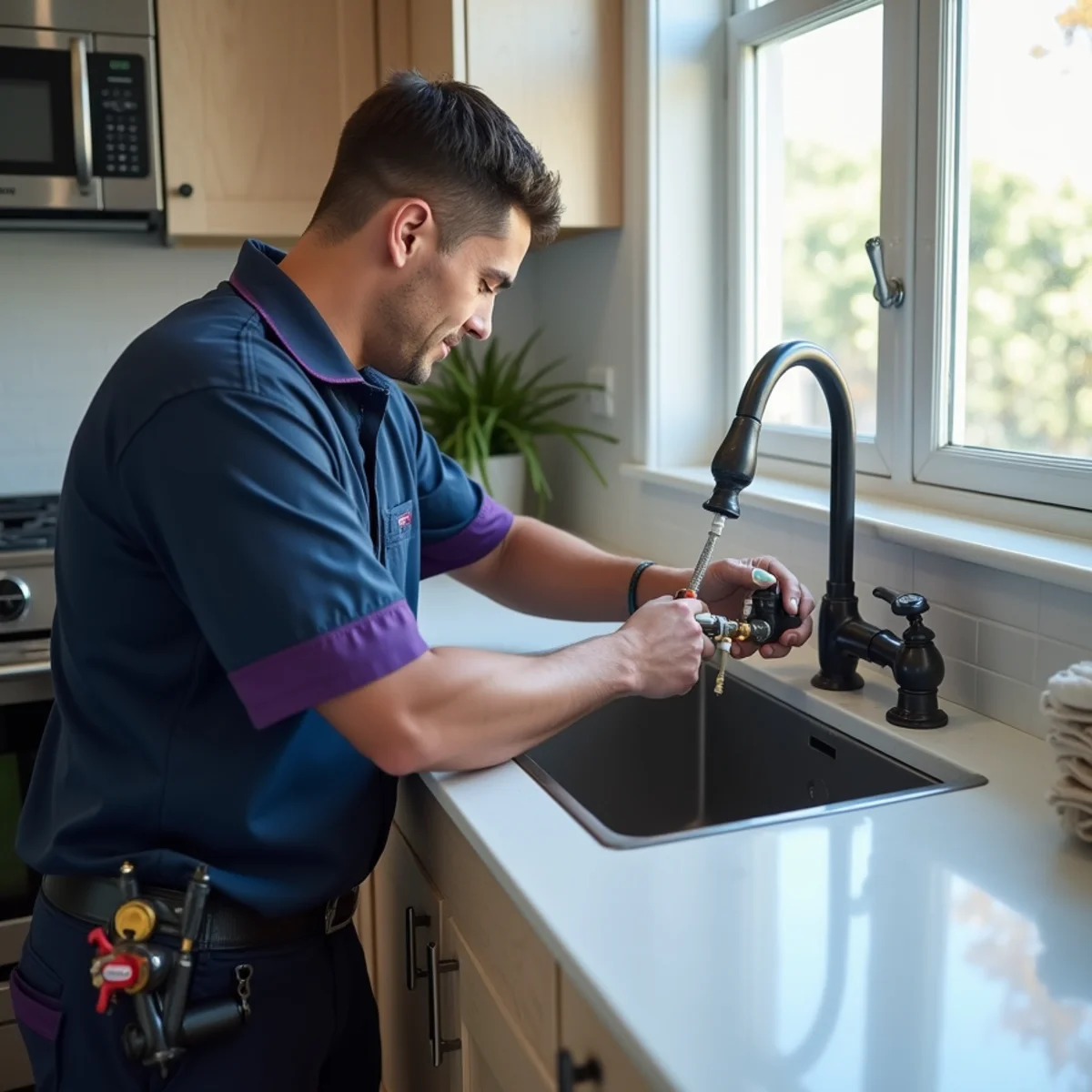
Signs it is time to request faucets & fixtures
The pattern, timing, and number of affected fixtures often tell more than the loudest symptom. These signs are reasons to schedule diagnosis, not proof that the most expensive repair is necessary.
- A faucet drips after it is closed
- The handle is stiff, loose, or difficult to regulate
- Pressure is low at one fixture
- Water leaks below the sink
- A new sink or fixture needs compatible connections
How BH Plumbing & Drain Service approaches the work
Each appointment moves from protection and diagnosis to an approved scope, completed work, and verification. The exact equipment and tests change with the system, but the decision path remains clear.
Listen and protect the work area
We start with the symptoms you have noticed, protect nearby floors and finishes, and identify any immediate shutoff or containment step.
Identify the fixture, component, and connection condition
The technician checks the accessible system, tests the likely causes, and explains what the evidence shows before recommending work.
Repair the component or install and test the approved fixture
After you approve the written scope, the repair or installation is completed with attention to clean connections, safe operation, and the surrounding property.
Verify and explain
We operate the system, check for leaks or restored flow, clean the work area, and explain practical steps that may help prevent a repeat problem.
Should a dripping faucet be repaired or replaced?
Repair is often sensible when the body and finish are sound and the correct cartridge, seal, or valve part is available. Replacement may be better when parts are obsolete, the body is damaged, corrosion is extensive, or the fixture no longer suits the space.
The estimate should separate fixture cost from any shutoff, supply, drain, countertop, or cabinet work discovered during evaluation.
Why is faucet pressure low at only one sink?
A clogged aerator, cartridge restriction, partially closed stop, kinked supply, debris after utility work, or fixture-specific design can reduce flow at one sink. Whole-property low pressure points to a different diagnosis.
Cleaning the aerator is a useful first test. Hot-only or cold-only loss narrows the issue to one side of the fixture or supply.
Can any faucet fit my existing sink?
No. Hole count, spacing, deck thickness, reach, backsplash clearance, supply routing, drain components, and mounting access must match. Wall-mounted, widespread, single-hole, touchless, and commercial fixtures have different requirements.
Photos from above and below the sink plus the product specification sheet help confirm compatibility before the appointment.
Where is the faucet leak or low-flow restriction actually located?
A drip from the outlet can involve a cartridge, stem, ceramic disc, seat or seal, while water at the handle, swiveling spout, faucet body, mounting deck or cabinet can have a different source. Drying each connection and testing hot, cold and fixture functions separately prevents a supply, drain or countertop leak from being mislabeled as a failed faucet.
Start by recording when the symptom appears: with both handles closed, only while hot or cold runs, during spout rotation, when a pull-down hose moves, while the basin fills, or only as it drains. An outlet drip can involve the exact cartridge, stem, washer, seat, ceramic-disc assembly or internal seal used by that model. Water around a handle or body seam can travel across the escutcheon and emerge below the deck; water around the faucet base can come from a deck gasket, mounting seal, loose shank or counter opening rather than the internal valve. Below the sink, dry and inspect each angle stop, flexible connector, faucet shank, quick-connect, outlet hose, spray-hose weight area and mounting hardware before operating one side at a time. Then fill and drain the basin to distinguish a faucet leak from the sink strainer or drain flange, pop-up linkage, tailpiece, P-trap, disposal connection, countertop seam or water already trapped on the cabinet base. For low flow, compare the spray pattern and volume at the aerator or spray head, hot against cold and this fixture against nearby fixtures. Debris or scale at an aerator, screen, cartridge, stop or connector can restrict one faucet; a kinked hose or partially closed stop can do the same. Whole-property pressure loss, intermittent building pressure or several weak fixtures needs broader water-supply diagnosis. A test should isolate the source before a part is ordered or a cabinet opening is blamed.
When should a faucet be repaired, rebuilt, or replaced?
Repair is usually the narrowest option when one compatible cartridge, stem, seal, aerator, handle or connection has failed and the body, mounting and finish remain sound. Rebuilding can fit a serviceable design with several matched wear parts. Replacement is better supported by a cracked or corroded body, unavailable parts, unsuitable fit or a verified function goal—not by age alone.
A component repair begins with the exact manufacturer, model family, valve design and part orientation because similar-looking cartridges, stems and ceramic discs can have different lengths, splines, ports and temperature limits. Replacing a washer or seal cannot correct a damaged seat, scored body, loose internal casting or recurring corrosion. A rebuild should use the matched repair kit and preserve hot/cold orientation, handle travel, temperature control and any manufacturer adjustment; it should not become a collection of improvised parts. Replacement may be reasonable when the faucet body or shank is cracked, pitted or unstable, a finish is failing around a leak path, the required part cannot be reliably identified or obtained, the fixture cannot fit the intended sink or use, or a documented flow, accessibility or sensor-control goal requires another model. The decision must also separate the faucet from adjacent work. A new fixture does not repair a stop that will not close, a leaking connector, a restricted branch, an unsealed counter opening, a failed sink drain or a cabinet damaged by a prior leak. Conversely, an old but serviceable faucet does not need replacement solely because an accessible aerator or cartridge is restricted. A written scope should identify supplied parts, customer-supplied product responsibility, removal and disposal, stops and connectors, drain or pop-up work, mounting-surface correction, power needs and finish restoration so a small repair and a connection project are not priced as the same job.
What must be checked before a replacement faucet is selected?
Confirm the exact model against the sink and room: hole count and spacing, deck or wall mounting, deck thickness, shank and fastener reach, spout height and reach, backsplash or window clearance, spray-hose travel, cabinet access, stops, connectors, drain parts, pressure and power. Potable use, efficiency and backflow claims must be verified for that specific product and application.
A single-hole, centerset, widespread, bridge, wall-mounted, commercial, pull-down or touchless faucet is not interchangeable merely because its supply connections appear similar. Compare the specification drawing with the sink or countertop openings, center-to-center spacing, mounting-surface thickness, underside clearance and available wrench access. Check whether the spout reaches the basin without splashing, clears a backsplash, medicine cabinet or window, swivels within the intended area, and leaves room for handles, soap dispensers and accessories. Pull-down and side-spray products need an unobstructed hose path and weight zone; shelves, disposal units, drain piping and stored items can interfere. Confirm stop size and position, flexible-connector length and routing, hot/cold orientation, expected pressure and flow, any integrated mixing or filtration connection, and whether the included pop-up or drain matches the basin overflow and finish. Touchless products can use batteries, plug-in power or another listed supply, and quick-closing controls can introduce model- and system-specific water-hammer considerations. For drinking-water contact, verify the exact product’s intended use and current listing or certification information for applicable potable-water and lead-content requirements rather than relying on a generic label. WaterSense eligibility is narrower: EPA currently labels qualifying private lavatory and bar-sink faucet products, not kitchen, public-lavatory or metering faucets, so the exact eligible model must appear in current certification information. Backflow protection is checked where a spray, hose, personal-hygiene attachment or other outlet design requires it; it is not a universal add-on to every faucet. In a condo or shared property, confirm whether the unit stops operate, whether a riser shutdown requires association or management approval, who provides access and notice, and whether product or electrical rules apply before disconnecting anything.
What belongs in an approved installation, test, price, and closeout?
The scope should identify the fixture, connections, shutoff authority, product instructions, potable requirements, mounting seal, drain work and permit jurisdiction before installation. Closeout should flush debris, test every disturbed pressure joint, verify hot/cold control, flow, spray or sensor functions, fill and drain the basin, and leave the mounting and cabinet dry. Pricing should separately assign access, corrections and restoration.
Protect the sink, counter, cabinet and nearby finishes, then close an authorized stop or building valve and confirm isolation before removal. A stop that does not close, a corroded nipple or an inaccessible shared valve changes the approved scope; it should not be forced simply to preserve a quoted faucet-only price. Install the exact deck gasket, escutcheon, sealant, mounting bracket, shank, connector, hose, spray weight, control box and drain components required by the model instructions, keeping flexible connectors accessible, un-kinked and compatible with continuous pressure. Potable components should have the current listing or certification required for their intended use; a marketing claim or one standard number should not be treated as proof of every requirement. Flush the supply or faucet as the exact manufacturer directs before the final aerator or spray head is returned to service so construction debris does not damage a new sealing surface or remain trapped at a screen. Restore pressure gradually and inspect the stop body, packing, outlet, connectors, shanks, quick-connects, faucet body, pull-down hose, sprayer and every other disturbed joint both while closed and while flowing. Verify hot on the intended side, smooth handle travel, shutoff and temperature control, expected flow, aerator pattern, spray/diverter return, swivel clearance, hose retraction and sensor or battery operation where present. Fill the basin to test the stopper or pop-up, drain it while observing the flange, tailpiece and P-trap, and recheck the mounting deck, counter seam and cabinet base for water. Permit treatment depends on the exact address and scope: qualifying faucet or domestic-shutoff repair/replacement can be exempt in unincorporated Miami-Dade, while concealed piping, rearrangement, new electrical work and work inside a municipality can follow a different path. Price factors include model and parts, identification time, corroded stops or connectors, cabinet or wall access, counter or sink modification, drain work, building shutdown rules, permit or inspection needs and drying or finish repair. Closeout should record the installed model or repair part, disturbed connections, tests, unresolved exclusions and who owns countertop, cabinet, wall, tile, paint, electrical or moisture-restoration work.
What affects the estimate?
A responsible estimate reflects the condition, access, materials, equipment, permit path, and restoration—not just the service name. BH Plumbing & Drain Service does not publish a fake range that could exclude the work needed at your property.
- Brand, cartridge availability, and fixture design
- Condition of shutoffs, supplies, drains, and mounting surface
- Access inside cabinets, walls, or tight condo spaces
- Customer-supplied versus contractor-supplied fixture
- Countertop, sink, valve, electrical, or finish modifications
Miami-specific planning for faucets & fixtures
Mineral residue, salt exposure near the coast, imported fixtures, corroded shutoffs, and remodeled cabinets can turn a simple-looking Miami faucet replacement into a connection project. Testing the valves before disconnecting the fixture helps prevent an avoidable building shutdown.
Properties inside Miami-Dade’s 34 municipalities may use a city building department, while unincorporated parcels generally use County permitting. Condos can add management approval, service-elevator rules, vendor documents, unit protection, and shared water or drain shutdowns. Those conditions belong in the scope before work starts.
Technical entities you may hear during diagnosis
These terms describe parts, tools, or conditions relevant to this service. The technician should translate them into visible evidence and a practical decision rather than use jargon as a substitute for explanation.
- cartridge
- ceramic disc
- aerator
- angle stop
- supply line
- escutcheon
- tailpiece
- P-trap
- mixing valve
- sealant