
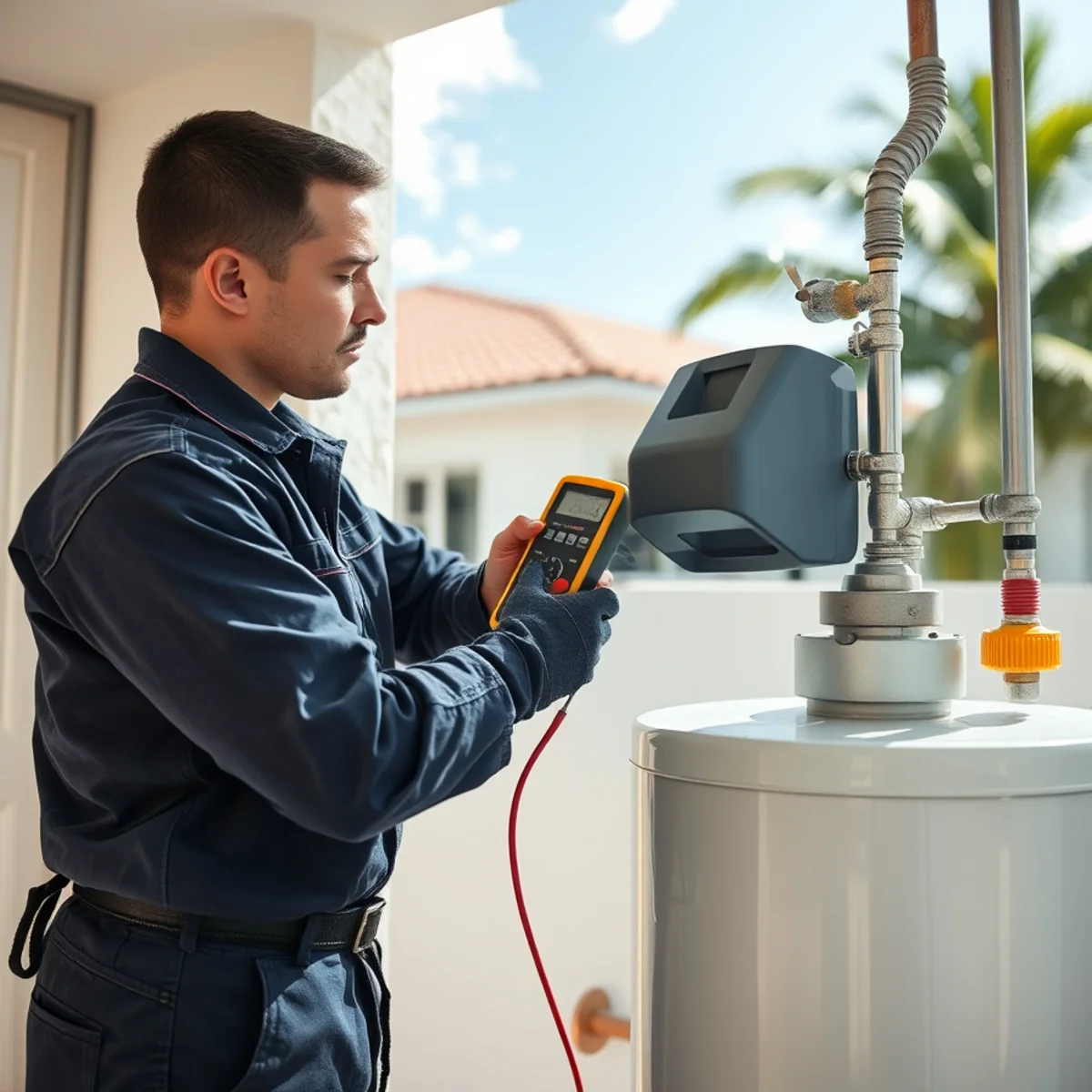
What this service covers
Restore reliable hot water with a clear repair-or-replace decision.
Miami’s warm climate does not eliminate water-heater stress: mineral deposits, humid utility spaces, salt exposure near the coast, tight condo closets, and permit requirements all affect the job. Replacing only the tank may be insufficient if the pan, shutoff, vent, gas sizing, or electrical connection also needs correction.
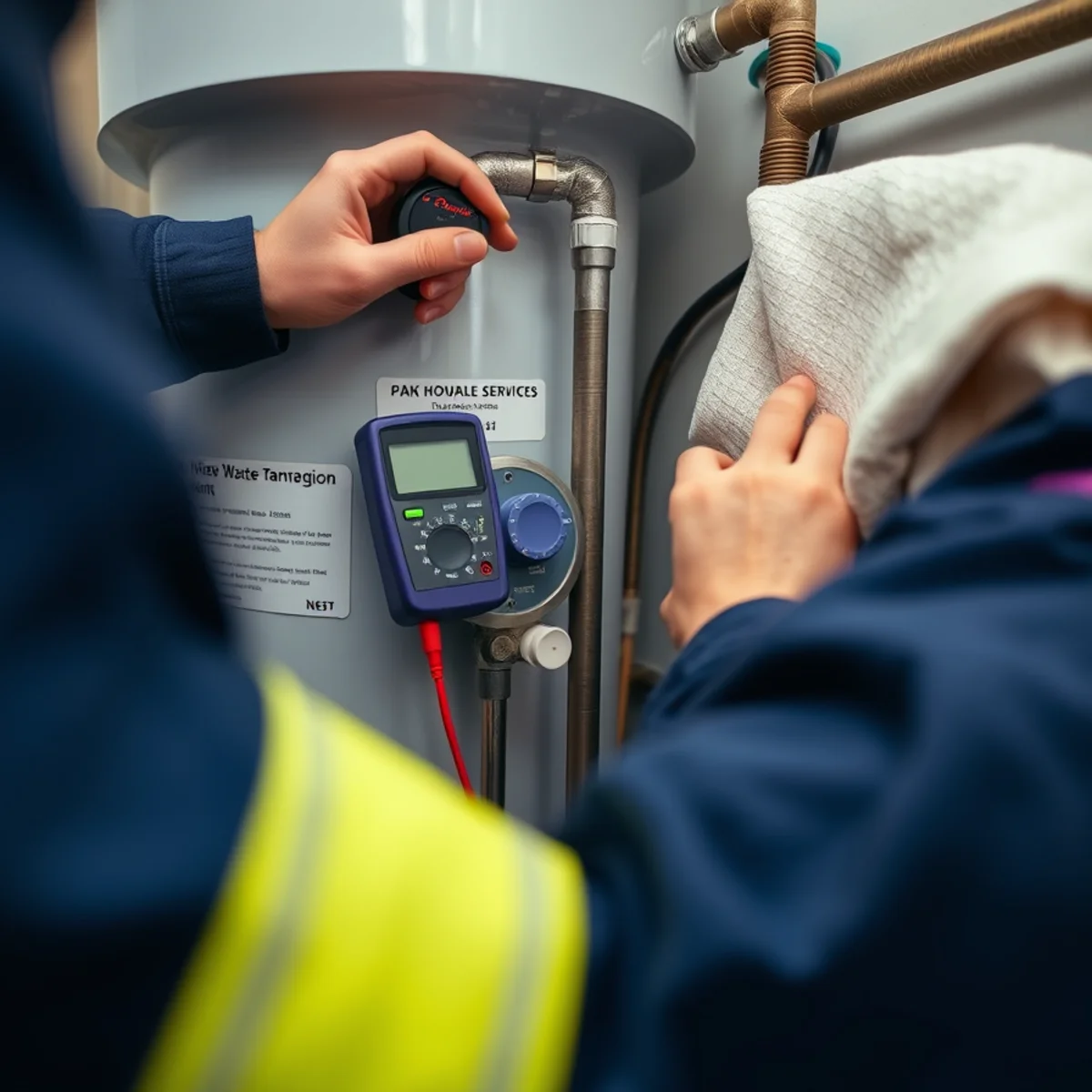
Signs it is time to request water heater repair
The pattern, timing, and number of affected fixtures often tell more than the loudest symptom. These signs are reasons to schedule diagnosis, not proof that the most expensive repair is necessary.
- No hot water or water turns cold too soon
- Water collects beneath the tank or at a connection
- The unit pops, rumbles, or cycles unusually
- Hot water is rusty or has an odor
- A breaker trips or a gas unit will not ignite
How BH Plumbing & Drain Service approaches the work
Each appointment moves from protection and diagnosis to an approved scope, completed work, and verification. The exact equipment and tests change with the system, but the decision path remains clear.
Listen and protect the work area
We start with the symptoms you have noticed, protect nearby floors and finishes, and identify any immediate shutoff or containment step.
Test the heater, controls, connections, and safety devices
The technician checks the accessible system, tests the likely causes, and explains what the evidence shows before recommending work.
Repair the failed component or install the approved replacement
After you approve the written scope, the repair or installation is completed with attention to clean connections, safe operation, and the surrounding property.
Verify and explain
We operate the system, check for leaks or restored flow, clean the work area, and explain practical steps that may help prevent a repeat problem.
Is it worth repairing a water heater?
Repair is often sensible when the tank is sound, the unit is not near the end of its expected service life, and one replaceable component caused the failure. A leaking or badly corroded tank usually points toward replacement.
We compare the failure, age, repair history, efficiency, availability of parts, and installation condition. The recommendation should explain both immediate cost and the likelihood of another major repair.
What is the most common water-heater problem?
Sediment and component failures are common. Electric units may lose an element or thermostat; gas units can have ignition or control problems; any tank can develop valve, connection, or internal corrosion leaks.
Popping or rumbling often suggests sediment. Water from the T&P discharge, corrosion, or leakage at the base needs prompt evaluation because safety and tank integrity may be involved.
Does Miami-Dade require a permit for replacement?
Miami-Dade states that many water-heater replacements or related plumbing, gas, and electrical alterations require permits, while some exact electric changeouts may qualify for limited exemptions. The property jurisdiction and exact scope must be checked.
Municipalities issue their own permits inside city limits. The quote should state who handles the permit and what inspection or upgrade is included.
What does the symptom tell you before a repair is chosen?
A water-heater symptom narrows the diagnostic path, but it does not identify one failed part by itself. No hot water, short hot-water duration, fluctuating temperature, noise, discolored hot water, and visible leakage each require different checks across the water supply, energy source, controls, heating components, safety devices, tank, and nearby connections.
For an electric storage heater, a technician may confirm power, breaker behavior, thermostats, upper and lower elements, wiring condition, and whether the tank is actually full before energizing it. A gas heater adds the fuel supply, ignition or pilot sequence, burner, gas control, combustion air, and venting to the inspection. Water that starts hot and quickly cools can involve demand, recovery, a failed lower element, control operation, sediment, or mixing elsewhere in the plumbing system. Popping can point toward sediment, while rusty hot water may involve the tank or anode but should first be compared with the cold supply. Water at the heater also needs source tracing: a loose connection, drain valve, condensate line, or relief discharge is different from a breach in the tank shell. A temperature-and-pressure relief valve should never be capped or blocked; repeated discharge needs the temperature, supply pressure, valve condition, and thermal-expansion conditions evaluated. Evidence from those checks should determine whether a component repair, maintenance step, installation correction, or replacement is responsible.
How should a replacement water heater be sized and selected?
A replacement should match peak hot-water demand, recovery needs, available fuel or electrical capacity, installation space, and the property’s operating priorities—not tank gallons or household size alone. Storage units should be compared by first-hour rating and efficiency, while tankless equipment is sized by simultaneous flow and temperature rise.
First-hour rating estimates how much hot water a fully heated storage unit can supply during the first hour of use; it combines stored volume with recovery. Uniform Energy Factor helps compare overall efficiency among suitable models, but a higher rating does not fix undersizing or an incompatible installation. A like-for-like storage tank may be the simplest path when its capacity and recovery already match demand. A tankless conversion can save floor space, yet it may require greater gas volume, new venting, a larger electrical load, condensate routing, or service valves. A heat-pump water heater can be efficient in South Florida, but the selected model still needs adequate surrounding air or an approved ducting approach, condensate drainage, electrical support, service clearance, and a location where sound and cool exhaust air are acceptable. In a Brickell or Miami Beach condo, the equipment dimensions, closet ventilation, common vent or utility limitations, association approval, service-elevator access, shutoff window, and drain route may control the choice. The written comparison should separate the equipment from required utility, permit, access, and finish work instead of presenting every upgrade as a simple tank swap.
What belongs in a safe installation and closeout scope?
A complete water-heater scope identifies the approved unit and fuel, permit responsibility, required utility changes, water connections, shutoff, safety devices, drainage, venting or electrical work, removal, startup, and final checks. The installer should follow the listed equipment instructions and the rules of the property’s actual permitting jurisdiction.
The proposal should state whether the work is a repair, exact changeout, capacity change, fuel conversion, or relocation because those scopes can follow different permit and trade requirements. Unincorporated Miami-Dade lists limited exemptions for qualifying electric water-heater work, while municipalities may administer their own requirements and the County’s gas-appliance exemption does not include gas water heaters. Installation details can include an accessible shutoff, approved connectors and materials, a drain pan and routed drain where leakage could damage the property, an unobstructed temperature-and-pressure relief valve and discharge route, and thermal-expansion control when the system conditions require it. Gas work must account for approved gas supply, combustion air, venting, and safe startup; electric work must match the unit’s voltage, wattage, overcurrent protection, disconnecting means, and manufacturer instructions. Heat-pump equipment also needs condensate and airflow verification. Closeout should confirm the tank is filled before energizing, connections remain dry, the burner or elements and controls operate, delivered temperature and recovery are reasonable for the settings, the work area is clean, and the old unit and included debris are handled as stated. The customer should receive the model information, operating guidance, warranty documents supplied with the equipment, permit or inspection status when applicable, and maintenance instructions for the installed system.
What affects the estimate?
A responsible estimate reflects the condition, access, materials, equipment, permit path, and restoration—not just the service name. BH Plumbing & Drain Service does not publish a fake range that could exclude the work needed at your property.
- Tank or tankless equipment type and capacity
- Gas, electrical, venting, and water-line conditions
- Access in a closet, garage, condo, or roof area
- Permit and municipal inspection requirements
- Drain pan, shutoff, expansion, disposal, and finish work
Miami-specific planning for water heater repair
Miami’s warm climate does not eliminate water-heater stress: mineral deposits, humid utility spaces, salt exposure near the coast, tight condo closets, and permit requirements all affect the job. Replacing only the tank may be insufficient if the pan, shutoff, vent, gas sizing, or electrical connection also needs correction.
Properties inside Miami-Dade’s 34 municipalities may use a city building department, while unincorporated parcels generally use County permitting. Condos can add management approval, service-elevator rules, vendor documents, unit protection, and shared water or drain shutdowns. Those conditions belong in the scope before work starts.
Technical entities you may hear during diagnosis
These terms describe parts, tools, or conditions relevant to this service. The technician should translate them into visible evidence and a practical decision rather than use jargon as a substitute for explanation.
- tank water heater
- electric element
- gas burner
- thermostat
- thermocouple
- anode rod
- sediment
- T&P relief valve
- drain pan
- expansion