
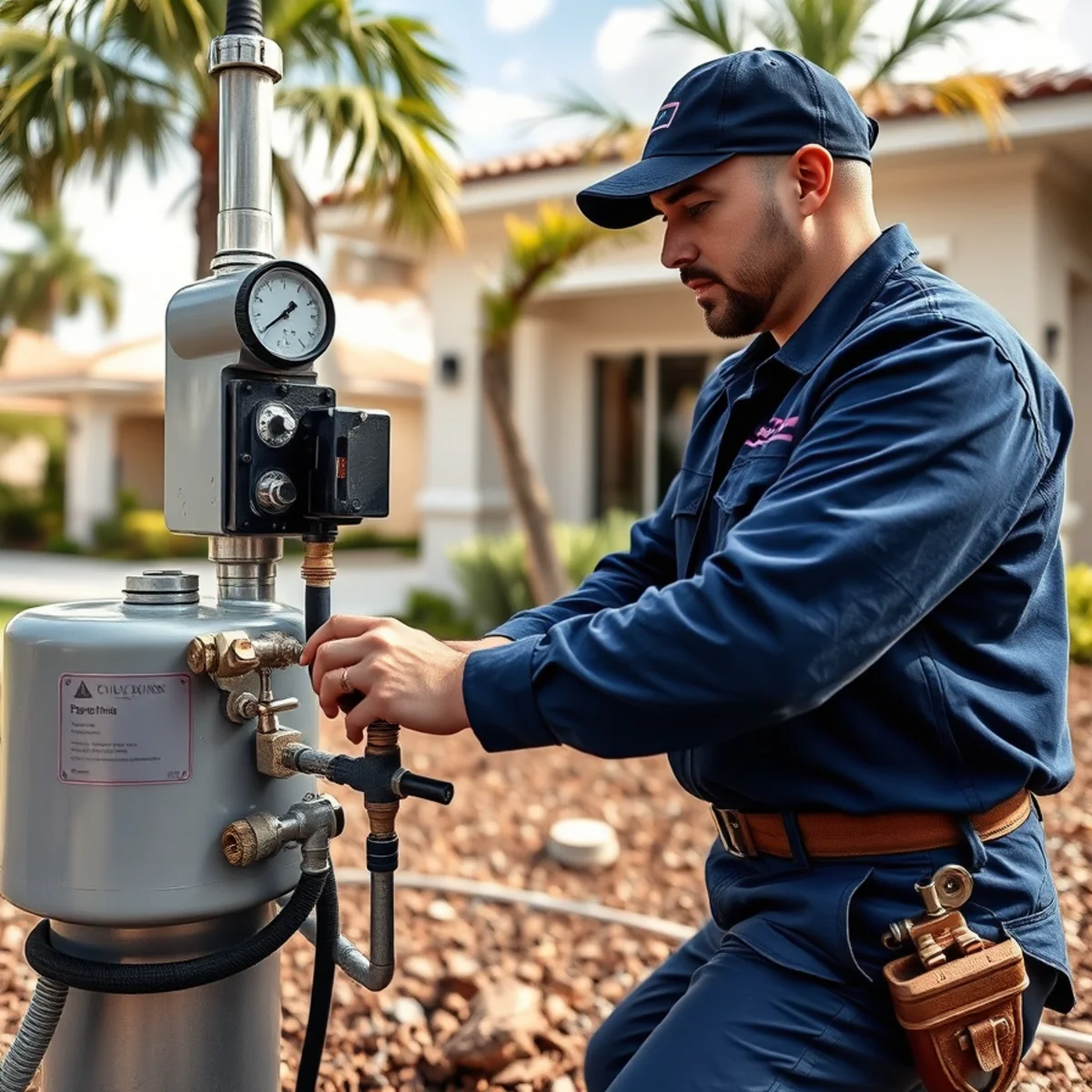
What this service covers
Separate pump, pressure, well, electrical, and water-quality problems.
Private wells remain relevant in parts of Redland, agricultural South Dade, Davie, and the Keys. Limestone geology, shallow groundwater, saltwater intrusion risk, iron or sulfur concerns, storm outages, and irrigation connections require a system-specific approach and appropriate laboratory testing.

Signs it is time to request well pumps
The pattern, timing, and number of affected fixtures often tell more than the loudest symptom. These signs are reasons to schedule diagnosis, not proof that the most expensive repair is necessary.
- Water pressure cycles rapidly
- The pump runs continuously or does not start
- Air or sediment appears at fixtures
- The pressure tank is waterlogged
- A private well needs treatment based on test results
How BH Plumbing & Drain Service approaches the work
Each appointment moves from protection and diagnosis to an approved scope, completed work, and verification. The exact equipment and tests change with the system, but the decision path remains clear.
Listen and protect the work area
We start with the symptoms you have noticed, protect nearby floors and finishes, and identify any immediate shutoff or containment step.
Identify the well system, pressure behavior, power, and qualification boundaries
The technician checks the accessible system, tests the likely causes, and explains what the evidence shows before recommending work.
Repair qualifying plumbing or coordinate pump, well, electrical, or treatment work
After you approve the written scope, the repair or installation is completed with attention to clean connections, safe operation, and the surrounding property.
Verify and explain
We operate the system, check for leaks or restored flow, clean the work area, and explain practical steps that may help prevent a repeat problem.
Why does well-water pressure rise and fall quickly?
Rapid cycling can result from a waterlogged or failed pressure tank, incorrect air charge, pressure-switch trouble, a leak, failed check valve, undersized storage, or pump problems. Pressure behavior must be tested safely with power considerations.
Repeated short cycling can damage pump equipment. Do not adjust controls beyond manufacturer and qualified-service guidance.
Why is there air or sediment in well water?
Possible causes include low water level, a leak on the suction side, failing check components, disturbed well conditions, corroded piping, pump issues, or treatment equipment. The source must be identified before installing a filter.
Sudden changes in color, odor, or taste justify water testing. Do not infer safety from appearance alone.
Who repairs a private well pump?
Qualification depends on whether the work involves building plumbing, electrical controls, above-ground equipment, the pump, well casing, drilling, or treatment. A licensed well or electrical specialist may be required.
BH Plumbing & Drain Service confirms the exact system and its authorized role before accepting the project.
Is this municipal water, a private well, an irrigation source, or a booster system?
Confirm the source and intended use before diagnosing a pump. A municipal service with a booster is not a private well, and a domestic potable well is not interchangeable with an irrigation, nonpotable, canal, lake, cistern, or shared supply. Review the bill and meter, source valves, well permit and completion log, water-use records, labeling, pipe route, and actual equipment before assigning the pump type or authority.
Start at the property boundary and trace the supply without creating a cross-connection. A municipal meter, utility account and service valve can coexist with a separate irrigation well; a pressure booster may serve a tall building or weak incoming service without drawing groundwater. Irrigation equipment can draw from a permitted well, canal, lake, reclaimed connection or storage source, each with different ownership, treatment, backflow and use restrictions. A shared residential, commercial or limited-use well can add operating permits, management and sampling responsibilities that do not apply to one private household. For an actual well, collect the address and folio, construction or repair permit, well log/completion report, unique identifier where available, intended use, casing and seal information, original and current pump records, static and pumping levels if documented, yield test, treatment history and prior laboratory results. Field-map the wellhead, casing or well point, suction or drop pipe, submersible, jet or above-ground centrifugal pump only where equipment and records support that classification, check or foot valve, discharge piping, pressure tank, gauge, switch, controller or variable-speed drive, protection device, relief, power source, treatment and distribution branches. A jet pump’s suction/prime path behaves differently from a submersible pump and drop pipe; neither should be inferred from a generic pressure tank beside the house. Mark potable and nonpotable piping and identify any irrigation, pool, chemical-feed, hose, tank or municipal interconnection so the required separation or backflow review follows the actual hazard and authority.
What causes no water, low pressure, short cycling, air, sand, cloudiness, or odor?
No water or low pressure can start with the source, closed valve, demand, leak, filter, pressure tank, switch, controller, power, pump, pipe, check valve, prime, or inadequate well recovery. Short cycling often involves lost tank drawdown, air charge, a leak, control settings, check-valve return, or mismatched equipment. Air, sand, cloudiness, color, or odor are observations—not proof of a contaminant or treatment need.
Record whether every outlet is affected, whether the municipal branch or only the well branch failed, pressure at rest and under controlled demand, gauge behavior, pump sound, controller code, recent electrical event, irrigation schedule, filter condition, visible leaks and how long the symptom takes to appear. For a no-start, the qualified electrical party checks supply, disconnect, conductor, grounding, protective device, overload, control box, relay, capacitor, motor circuit and drive as applicable; a plumbing observation cannot certify those conditions. For a running pump with no delivery, consider an empty source, falling pumping level, lost prime, suction leak, failed foot/check valve, damaged drop or discharge pipe, blocked intake, worn pump, incorrect rotation where applicable, closed valve or operating point beyond the pump curve. Low pressure can also reflect undersized or restricted distribution, peak demand above design, a leaking service, clogged treatment, pressure-control issue or inadequate source yield. Short cycling needs actual tank drawdown and cycle observation; a waterlogged or failed bladder tank, incorrect precharge measured only after safe depressurization, a blocked switch sensing port, leakback or high demand can create similar behavior. Air can enter through suction-side leaks, low water level, disturbed plumbing or treatment equipment. Sand or cloudy water can follow construction disturbance, screen/casing or formation issues, excessive entrance velocity, low water level, pipe corrosion or treatment-media release, but appearance does not identify source or potability. Odor can arise in source water, plumbing, a heater, drain, storage or treatment equipment. Protect people from wet electrical enclosures and energized standing water, isolate through a known disconnect and verify de-energization before qualified service, relieve stored pressure before opening a tank or fitting, and never run a pump dry, against a closed discharge or outside its instructions. Do not pull a pump, enter a well enclosure, adjust live controls or open pressurized equipment without the correct training, tools and authority.
When should the tank, controls, piping, or pump be repaired or replaced—and when is it well work?
Repair fits a proven compatible defect in an accessible pressure tank, gauge, switch, check valve, piping, controller, protection device, or pump when the source and remaining system are serviceable. Replacement fits confirmed failure, corrosion, unavailable parts, incompatibility, or a measured performance shortfall. Casing, screen, deepening, redevelopment, construction, modification, or abandonment are regulated well work; water treatment follows appropriate laboratory evidence.
Separate component evidence from source limitations. A pressure tank can be replaced when its bladder, shell, fitting or usable drawdown is proven defective and the selected tank matches pump delivery, controls and listing. A clogged sensing line, damaged switch, gauge, check valve, leaking fitting, failed relay or compatible controller can be a bounded repair after electrical and pressure safety are established. Pump repair or replacement requires the exact model/nameplate where available, motor and control compatibility, source type, pipe and wire, setting, condition on removal, required flow and head, and evidence that the well can support the intended duty. Installing a larger pump does not create more well yield and can increase drawdown, sand movement, cycling, energy use or failure risk. If static or pumping level has changed, yield is inadequate, sand appears persistently, casing or screen integrity is questioned, the well must be deepened/redeveloped, or the well will be abandoned, stop treating the job as an above-ground plumbing swap. Obtain the well log and current SFWMD/delegated-agency permit path and assign a Florida-licensed water-well contractor for regulated construction, repair, modification or abandonment. Electrical alterations, motor circuits, disconnects, grounding, drives and controls go to the properly authorized electrical scope. Potable plumbing, pressure tanks, valves, distribution and cross-connection controls follow their own code and permit path; irrigation and nonpotable systems require clear separation and the applicable irrigation or source authority. A water-quality change after flooding, construction, pump work or a new symptom goes to the appropriate health-department/certified-laboratory process with sample location and analytes selected for the event. A filter or softener should not be sold from color, odor, sand or cloudiness alone, and pump service does not establish a contaminant-removal result. Verify every assigned individual, business, permit, license and exact activity in current official records. This page does not state that the provider holds an unconfigured water-well contractor or electrical credential.
How should yield, pump sizing, permits, startup, testing, maintenance, and pricing be documented?
Size from verified demand, source yield and recovery, static and pumping water levels, drawdown, elevation, pressure target, pipe/friction loss, total dynamic head, pump curve, duty and pressure-tank/control strategy—not horsepower alone. The scope should identify permits, qualified parties, well and equipment records, access, restoration, startup tests, water-quality sampling responsibility, maintenance and exclusions. Price follows those verified conditions.
Define peak fixture or irrigation-zone demand and the pressure required at the most demanding outlet. Establish static level before pumping and pumping level under a documented flow where the qualified well party can test it; drawdown is their difference, while recovery describes how the source rebounds after or during demand. A single brief bucket test at one faucet does not establish sustainable well yield. Add elevation from pumping level to delivery, required outlet pressure and friction through drop/suction pipe, discharge, valves, filters, tanks and distribution to determine total head. Plot the required flow/head duty point against the exact pump curve and confirm its permitted operating range, motor, voltage, phase, wire and control compatibility. Size pressure-tank usable drawdown and switch or variable-speed behavior to support reasonable cycling and system demand under the current code and manufacturer instructions. Do not publish a generic well depth, yield, pump lifespan or replacement size. Before work, confirm SFWMD or delegated-agency well permit/log requirements, municipality/building permits, potable-system approval where applicable, setbacks and wellhead protection, electrical scope, cross-connection/backflow controls, utility and private-line locating, access for lifting equipment, overhead/underground electrical hazards, landscaping/hardscape removal and restoration. At startup, the correct parties verify casing/wellhead condition within scope, piping support and leaks, valve/check operation, tank precharge under the proper depressurized procedure, pressure switch or drive sequence, relief, prime where applicable, controlled flow and pressure, cycle behavior, dry-run or overload protection, and motor voltage/current/grounding through qualified electrical testing. Potable-system purge, disinfection and certified-laboratory sampling follow the adopted code, permit, repair event and health guidance; record the sample point and do not represent a clear sample bottle or normal odor as a result. Leave the owner the well log/permit, pump curve and duty point, model/serial, settings, pressure/flow/yield observations, electrical and water-quality reports from the responsible parties, restoration notes and unresolved limits. Maintenance should follow the exact pump, tank, controls, source use, water conditions and records. The estimate should separate diagnosis, hydraulic/yield testing, pump/tank/controls/piping, electrical, well-contractor work, permits, lifting/access, treatment/laboratory work, materials, dewatering and restoration; cost and completion depend on the proven depth, equipment, access and failure mode rather than a generic package.
What affects the estimate?
A responsible estimate reflects the condition, access, materials, equipment, permit path, and restoration—not just the service name. BH Plumbing & Drain Service does not publish a fake range that could exclude the work needed at your property.
- Above-ground plumbing versus down-hole pump or well work
- Pump type, depth, capacity, and controls
- Pressure tank, switch, check valve, and piping condition
- Electrical diagnosis and specialist licensing
- Laboratory testing, treatment, access, and equipment removal
Miami-specific planning for well pumps
Private wells remain relevant in parts of Redland, agricultural South Dade, Davie, and the Keys. Limestone geology, shallow groundwater, saltwater intrusion risk, iron or sulfur concerns, storm outages, and irrigation connections require a system-specific approach and appropriate laboratory testing.
Properties inside Miami-Dade’s 34 municipalities may use a city building department, while unincorporated parcels generally use County permitting. Condos can add management approval, service-elevator rules, vendor documents, unit protection, and shared water or drain shutdowns. Those conditions belong in the scope before work starts.
Technical entities you may hear during diagnosis
These terms describe parts, tools, or conditions relevant to this service. The technician should translate them into visible evidence and a practical decision rather than use jargon as a substitute for explanation.
- submersible pump
- jet pump
- pressure tank
- pressure switch
- check valve
- well casing
- drop pipe
- control box
- sediment
- water test