Service and place, considered together
Why emergency plumbing in Miami needs a local plan
Miami properties around Brickell, Downtown, Coconut Grove, Little Havana, and the Miami River include a dense mix of early bungalows, mid-century ranches, duplexes, high-rise condos, restaurants, and new infill. For emergency plumbing, that building mix changes access, ownership boundaries, pipe routes, shutdowns, and the evidence needed before a lasting recommendation.
Heavy summer rain, hurricane season, high-rise stacks, slab leaks, and aging cast iron create distinct Miami emergencies. Safety comes before property protection: do not enter standing water near power, do not investigate a gas odor with switches or flames, and do not handle sewage without protection.
In this part of Miami-Dade, cast-iron drain wear, slab leaks, shared stacks, grease buildup, and storm-driven backups can appear only blocks apart. That does not mean every property has an age-related or climate-related failure. It means the technician should test the likely causes in a deliberate order and show why a particular cleaning, repair, or replacement belongs in the scope.
Problems that justify a closer look
One symptom is not a diagnosis. The most useful clues are which fixtures or equipment are affected, whether the problem is constant or intermittent, how quickly it returned after prior work, and whether neighboring units or exterior areas react at the same time.
- An active leak cannot be contained
- A toilet or drain is overflowing sewage
- A pipe burst or ceiling is releasing water
- There is no water or a sudden major pressure loss
- A water heater is leaking heavily or a gas odor is present
Photographs, equipment labels, previous invoices, camera footage, leak history, and building notices can shorten the appointment. If active water is near electricity, sewage is entering an occupied area, or gas odor is present, move to safety first and explain the condition when calling.
Our Miami service process
The work moves from protection and diagnosis through an approved scope, completion, and verification. The tools change with the system; the responsibility to explain findings before expanding work does not.
Listen and protect the work area
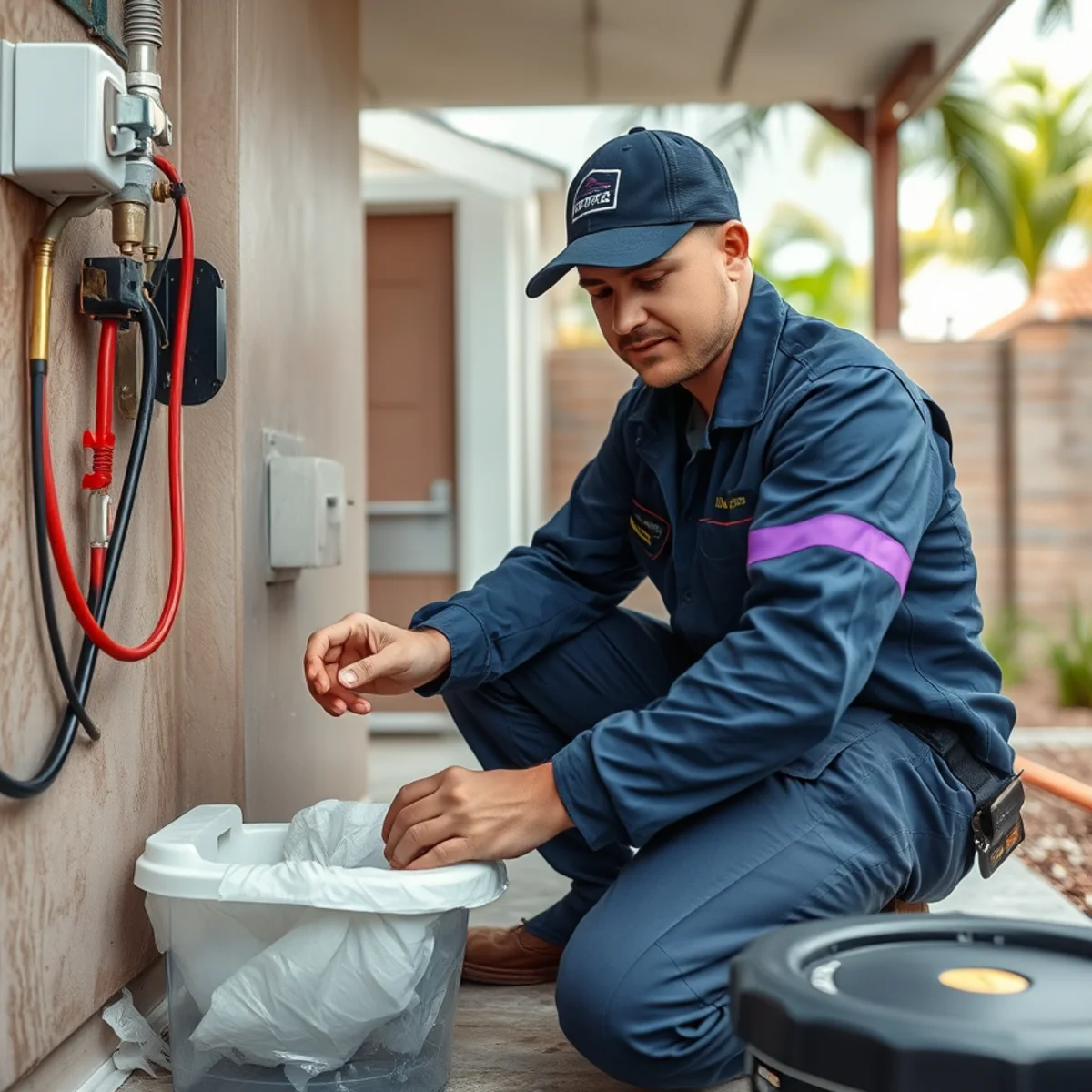
We start with the symptoms you have noticed, protect nearby floors and finishes, and identify any immediate shutoff or containment step.
Triage the call and identify safe shutoff steps
The technician checks the accessible system, tests the likely causes, and explains what the evidence shows before recommending work.
Stabilize the failure and complete or plan the repair
After you approve the written scope, the repair or installation is completed with attention to clean connections, safe operation, and the surrounding property.
Verify and explain
We operate the system, check for leaks or restored flow, clean the work area, and explain practical steps that may help prevent a repeat problem.
Building access and project coordination
City of Miami permits, high-rise management, metered service, parking, and building shutoffs can shape the service plan. Those practical conditions can control when the system is isolated, where equipment can travel, how finishes are protected, and which party authorizes work.
A detached home may require tracing beneath a slab or through a landscaped yard. A condo may need management documents, a service elevator, a riser shutdown, neighbor access, and clear unit-versus-association responsibility. A business may require after-hours service, containment, customer-area protection, and a documented reopening test.
Permit requirements are determined by jurisdiction and scope. Before regulated work starts, the proposal should state who pulls the permit, who meets the inspector, what testing is included, and which restoration remains outside the plumbing scope.
What affects the estimate?
There is no honest one-price answer without seeing the system. For this service, the estimate responds to the evidence, safe access, materials, equipment, code path, restoration, and whether the problem is isolated or extends into shared or concealed piping.
- Type and severity of emergency
- Time, availability, and safe site access
- Diagnostic work needed before repair
- Parts, equipment, and temporary containment
- Water-damage restoration or follow-up work outside plumbing scope
Ask each contractor to define the same boundaries: diagnosis, labor, material, equipment, permits, inspection, cleanup, debris removal, finish restoration, and post-work verification. That makes proposals comparable and reduces change-order surprises.
Who should respond first to a Miami plumbing emergency?
Route the highest hazard first. Leave and use emergency or gas-utility help for gas odor, hissing, fire or collapse risk; use an electrician when water blocks safe electrical access; report broken public pipes, meters, hydrants, manholes, pump alarms, area-wide no water or overflowing public manholes to WASD. A private plumber handles authorized private piping and drainage after the scene is safe.
During phone triage, lead with danger rather than a guessed diagnosis: the exact address, callback number, property type, unit and floor, whether clean water or sewage is moving, whether anyone smells gas, whether water touches outlets, panels, appliances, elevator equipment or other energized systems, and whether the whole building or neighborhood has lost water or pressure. For smoke, fire, medical distress, structural movement, uncontrolled gas or another immediate threat to life, leave the area and use 911 or the responsible emergency authority. Do not investigate a gas odor with lights, switches, a phone, vehicle, flame or tool nearby. From a safe location, contact the gas utility or emergency responders; plumbing gas work follows only after the immediate scene is released. If standing water separates you from a panel, breaker, pump, appliance or valve, do not cross it or turn power on or off—use a qualified electrician or emergency responder. Miami-Dade WASD’s current emergency path covers broken or leaking public water/sewer pipes, hydrants, manholes and meters; pump-station alarms; uncovered manholes; low pressure or loss of service; public sewer backup or overflow; water-quality concerns and hazardous conditions. Confirm the serving utility and report address-wide or area-wide symptoms and right-of-way conditions before authorizing private work. A private plumber can address a failed fixture stop, appliance connector, private service after the utility boundary, interior branch, water heater, building drain or private sewer lateral when access and control are authorized. In Downtown Miami, Brickell, Little Havana, Coconut Grove and Wynwood, the responder may also include management, security, a building engineer, a fire-system professional or a restoration provider. Record who controls each boundary instead of treating one plumbing call as authority over every hazard and system.
What phone details and shutoff authority make a Miami response safer?
State whether flow is active, its apparent source and color or odor, affected fixtures and units, the last water use, safe valve status and all gas, electrical, sewage or structural hazards. Use only an identifiable dry-location fixture or appliance stop, private main or authorized unit valve. Do not force a valve or operate utility, riser, central, neighboring or fire-system controls without authority.
Severity depends on consequence and control. An active burst soaking several rooms, sewage entering occupied space, a dangerous water-heater failure, no usable sanitation for the property or water migrating through multiple floors is different from a contained drip with a working local stop. Tell the phone contact whether closing one fixture or appliance valve changed the flow; whether the private main is known, accessible from a dry place and operating; whether a condo or commercial manager controls the riser, pressure zone, central hot water, stack or neighboring access; and whether a hotel, restaurant, office or retail tenant has life-safety, food, guest or business-continuity constraints. Do not close an unfamiliar fire-protection valve, touch a utility meter control, force a corroded main or enter a mechanical/electrical room without permission. A controlled local stop can preserve water for the rest of a detached house or tenant space. A private main may limit an uncontrolled pressurized leak when it is safe and clearly identified. In a Brickell or Downtown tower, management may need to notify units, schedule a riser or pressure-zone shutdown, protect elevators and common areas, provide vendor access and approve reopening. In a Little Havana duplex, apartment or mixed-use building, confirm which owner or manager can authorize common piping and another occupant’s space. Use photographs and move dry belongings only after people are safe; do not delay the call to test a dangerous area. The owner supplied emergency leak service but not verified 24/7 operating hours or an arrival-time commitment. Call to confirm current availability. Traffic, active calls, weather, address access, parking/loading, parts, safe shutdowns and building permissions change the response, so this page does not promise a dispatch or arrival window.
Is Miami water coming from private plumbing, sewage, storm flooding, or the building envelope?
Match the water to the operating system and weather. A pressurized supply can flow without fixture use; a sanitary backup reacts to drainage and may affect low fixtures; roof, façade and window entry follows rain and wind; storm drains, groundwater and public-system overload follow site conditions. Floodwater may contain sewage or chemicals. Do not classify or clean it as a simple pipe leak by appearance alone.
Stop using fixtures that discharge into a sanitary backup and keep occupants and pets away. Multiple low drains rising together, sewage odor or wastewater at a cleanout can point toward a building drain or private lateral, while an overflowing public manhole or area-wide sewer event belongs first with WASD. Do not open a pressurized cleanout, mix drain chemicals or run more water to see whether contaminated overflow worsens. For clean-water concerns, a fixture or appliance stop, private-main response, meter behavior, pressure and accessible connections can help distinguish a supply failure; a plumber may need controlled tests after stabilization. During Miami thunderstorms, hurricanes, king tides or street flooding, water can enter from roofs, façades, windows, terraces, garage openings, private storm drains or shallow groundwater and can migrate to the same wall, ceiling, slab edge or lower unit reached by plumbing. Rain timing does not prove exterior intrusion, and a sewer backup during rain does not prove the public system caused a private blockage. Preserve separate timelines for fixture use, water-meter behavior, drain reactions, rainfall, tide, roof or window exposure, HVAC condensate and public notices. City of Miami guidance says not to enter when floodwater surrounds a building or gas is present. CDC and EPA treat floodwater as potentially contaminated and warn against electrical actions while standing in water. Once the immediate source is isolated or identified, label the water category and unresolved scope carefully: potable supply, sanitary sewage, appliance discharge, condensate, roof/façade entry, private stormwater, groundwater or public infrastructure. Plumbing diagnosis does not replace roof, envelope, electrical, environmental, public-works or emergency evaluation.
What does emergency stabilization complete, and what still needs repair or recovery?
Stabilization stops or limits the confirmed source and leaves the property in a documented safe operating or out-of-service condition; it is not automatically the permanent repair. Concealed access, parts, permits, utility or building shutdowns may require planned follow-up. Extraction, structural drying, sewage cleanup, microbial remediation and finish restoration remain separate scopes unless expressly included by qualified providers.
An accessible failed connector, valve, trap or short pipe segment may support direct repair and testing during the visit. A concealed burst, under-slab line, collapsed sewer, shared riser or stack, central system, gas-piping concern, unavailable approved part, unsafe electrical condition, restricted neighboring space or permit-dependent alteration may require temporary isolation, containment or an approved bypass followed by planned work. The written handoff should state what was shut, capped, cleared, repaired or left out of service; which fixtures, branches, units and common systems were affected; whether the water, drain, heater or equipment may be used; who can authorize reopening; and what part, access, permit, inspection or building notice remains. Stopping clean supply water does not extract standing water or dry walls, cabinets, flooring and concealed cavities. Clearing a sewer path does not clean, disinfect or remove sewage-contaminated material. EPA advises controlling the source and drying affected materials quickly, generally within 24–48 hours, while recognizing that floodwater may contain sewage or chemicals and qualified cleanup may be needed. That timing is recovery guidance, not a plumbing arrival promise or a guarantee that every material can be saved. Closeout should repeat the relevant verification: inspect repaired joints under controlled flow or pressure, operate affected fixtures or the cleared drain safely, confirm valve positions and restored service, document residual moisture without calling it proof of continued leakage, and note any inaccessible or untested route. Preserve photographs, observed water category, repair material, test results, permit/inspection status, manager notices, invoice, referrals and outstanding extraction, drying, electrical, structural, remediation and finish work. Those records support WASD, building and insurer review; the plumber does not grant a utility credit, assign association liability or decide policy coverage.
Technical terms in a useful diagnosis
main shutoff valve, fixture stop, burst pipe, sewage backup, overflow, and containment may appear during this service. Each term should be tied to a measurement, image, component, or repair decision—not used as a substitute for plain language.
- main shutoff valve
- fixture stop
- burst pipe
- sewage backup
- overflow
- gas odor
- electrical hazard
- water mitigation
- triage
- containment
Continue with the full service and city guides
Read the complete emergency plumbing guide for Miami for deeper process, pricing-factor, and FAQ coverage. The Miami plumbing guide explains additional housing, ZIP, permit, and access context.