
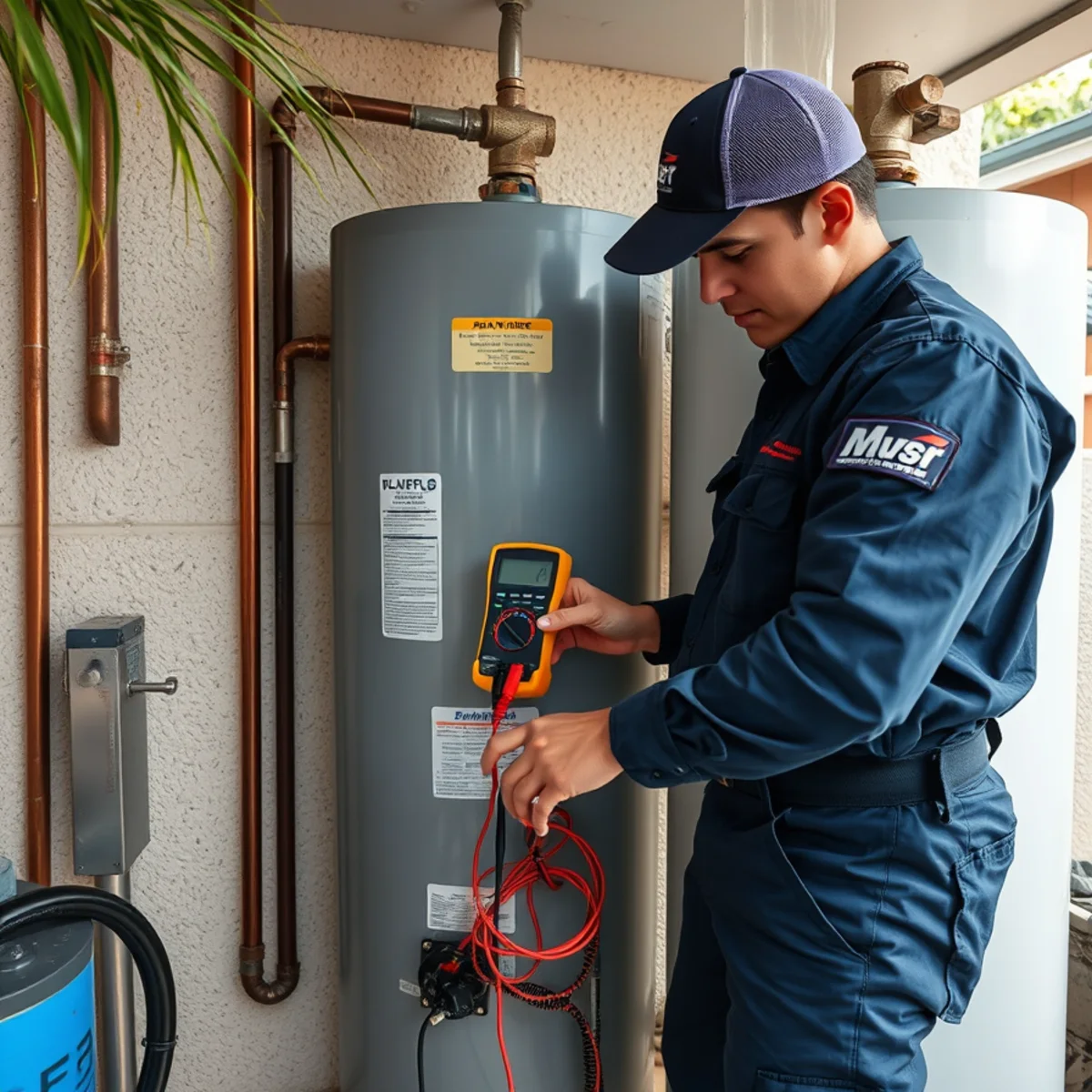
Service and place, considered together
Why water heater repair in Miami Gardens needs a local plan
Miami Gardens properties around Hard Rock Stadium, NW 27th Avenue, Carol City, and Bunche Park include postwar homes, newer infill, apartments, schools, retail, and event-related commercial properties. For water heater repair, that building mix changes access, ownership boundaries, pipe routes, shutdowns, and the evidence needed before a lasting recommendation.
Miami’s warm climate does not eliminate water-heater stress: mineral deposits, humid utility spaces, salt exposure near the coast, tight condo closets, and permit requirements all affect the job. Replacing only the tank may be insufficient if the pan, shutoff, vent, gas sizing, or electrical connection also needs correction.
In this part of Miami-Dade, mixed pipe materials, slab leaks, drain backups, exterior water lines, and high-use fixtures all occur. That does not mean every property has an age-related or climate-related failure. It means the technician should test the likely causes in a deliberate order and show why a particular cleaning, repair, or replacement belongs in the scope.
Problems that justify a closer look
One symptom is not a diagnosis. The most useful clues are which fixtures or equipment are affected, whether the problem is constant or intermittent, how quickly it returned after prior work, and whether neighboring units or exterior areas react at the same time.
- No hot water or water turns cold too soon
- Water collects beneath the tank or at a connection
- The unit pops, rumbles, or cycles unusually
- Hot water is rusty or has an odor
- A breaker trips or a gas unit will not ignite
Photographs, equipment labels, previous invoices, camera footage, leak history, and building notices can shorten the appointment. If active water is near electricity, sewage is entering an occupied area, or gas odor is present, move to safety first and explain the condition when calling.
Our Miami Gardens service process
The work moves from protection and diagnosis through an approved scope, completion, and verification. The tools change with the system; the responsibility to explain findings before expanding work does not.
Listen and protect the work area
We start with the symptoms you have noticed, protect nearby floors and finishes, and identify any immediate shutoff or containment step.
Test the heater, controls, connections, and safety devices
The technician checks the accessible system, tests the likely causes, and explains what the evidence shows before recommending work.
Repair the failed component or install the approved replacement
After you approve the written scope, the repair or installation is completed with attention to clean connections, safe operation, and the surrounding property.
Verify and explain
We operate the system, check for leaks or restored flow, clean the work area, and explain practical steps that may help prevent a repeat problem.
Building access and project coordination
event traffic, occupied homes, municipal permits, and commercial scheduling affect service logistics. Those practical conditions can control when the system is isolated, where equipment can travel, how finishes are protected, and which party authorizes work.
A detached home may require tracing beneath a slab or through a landscaped yard. A condo may need management documents, a service elevator, a riser shutdown, neighbor access, and clear unit-versus-association responsibility. A business may require after-hours service, containment, customer-area protection, and a documented reopening test.
Permit requirements are determined by jurisdiction and scope. Before regulated work starts, the proposal should state who pulls the permit, who meets the inspector, what testing is included, and which restoration remains outside the plumbing scope.
What affects the estimate?
There is no honest one-price answer without seeing the system. For this service, the estimate responds to the evidence, safe access, materials, equipment, code path, restoration, and whether the problem is isolated or extends into shared or concealed piping.
- Tank or tankless equipment type and capacity
- Gas, electrical, venting, and water-line conditions
- Access in a closet, garage, condo, or roof area
- Permit and municipal inspection requirements
- Drain pan, shutoff, expansion, disposal, and finish work
Ask each contractor to define the same boundaries: diagnosis, labor, material, equipment, permits, inspection, cleanup, debris removal, finish restoration, and post-work verification. That makes proposals comparable and reduces change-order surprises.
Is the Miami Gardens hot-water problem at one fixture, one heater, or the building supply?
Compare several hot outlets and confirm which unit or equipment serves them before choosing a repair. One cold shower can involve its cartridge, limit setting, mixing valve, or a local hot-cold crossover; every outlet losing heat can point toward the heater; and several apartments or commercial spaces changing together can involve shared equipment, a shutdown, or the available energy supply.
That distinction matters across Miami Gardens properties near Hard Rock Stadium, NW 27th Avenue, Carol City, Bunche Park, Andover, Norland, and Scott Lake. Ask whether the symptom began after fixture work, a building water shutdown, a storm outage, a breaker trip, gas-service interruption, or another occupant’s complaint. Electric storage diagnosis can involve the available supply, disconnect, high-limit control, thermostats, and upper or lower elements; a breaker that trips again should not be repeatedly reset. Gas equipment adds confirmed fuel, ignition, burner and control operation, combustion air, and venting. Tankless and heat-pump units add model-specific error history, flow, fans, sensors, filters, and condensate. Trace visible water to the cold inlet, hot outlet, connector, shutoff, drain valve, temperature-and-pressure relief discharge, pan, condensate tubing, tank shell, another pipe, or another unit instead of labeling every puddle a failed tank. Do not cap a relief discharge or cross standing water to reach electrical equipment. If equipment or wiring was wet, do not energize it for a test. If gas odor is present, leave without operating switches or flames and follow utility or emergency instructions.
What evidence supports repairing or replacing a Miami Gardens water heater?
Repair is stronger when the pressure vessel or heat exchanger is sound, one supported component explains the failure, demand remains adequate, and the surrounding installation can operate safely. Replacement is stronger when the tank or heat exchanger leaks, corrosion is extensive, failures repeat, essential parts or instructions are unavailable, or capacity, utilities, venting, drainage, or access no longer fit the property.
Record the rating plate, model and serial number, fuel, volume or flow rating, input or wattage, documented installation date, prior work, error history, exact leak source, and visible vessel condition. A failed connector, thermostat, element, supported control, ignition component, or drain valve presents a different decision from water emerging through a tank seam or damaged heat exchanger. Age provides context but not an automatic deadline, especially in Miami Gardens’ mix of postwar homes, remodeled residences, apartments, schools, retail spaces, and newer infill. Where equipment sits in a garage, exterior compartment, closet, or occupied service area, inspect the actual moisture exposure, corrosion, clearance, drainage, and removal path rather than assuming the location is suitable or damaged. A component repair also does not correct chronic undersizing, an inaccessible shutoff, an obstructed relief path, a closed-system expansion problem, unsuitable pan or condensate drainage, an incompatible circuit, inadequate gas supply, deficient venting, or equipment that cannot be serviced through the available opening. A useful comparison defines the immediate repair, unchanged risks, replacement equipment, related plumbing, electrical or gas work, City permit and inspection responsibility, removal and finish scope, and the closeout test without inventing a price threshold, completion time, warranty decision, or remaining service life.
How should demand, equipment fit, access, and City permits be planned in Miami Gardens?
Lock the job address, property authorization, busiest hot-water period, equipment rating, fuel or circuit, dimensions, drainage, venting or airflow, service clearance, removal route, shutdown window, and City permit path before a replacement is ordered. Matching the old tank gallons or assuming a low-cost project is permit-exempt can repeat a demand problem or miss required plumbing, electrical, gas, and inspection work.
A postwar single-family home in ZIP code 33055, an apartment in 33056, a school, a NW 27th Avenue retailer, and an event-related commercial property can have different peak demand and access constraints. Storage selection should consider first-hour rating and recovery during the busiest use; Uniform Energy Factor compares efficiency among otherwise suitable models. Tankless output depends on simultaneous flow and required temperature rise plus the electrical service or confirmed gas capacity, combustion air, approved venting, and condensate provisions behind the rating. An integrated heat-pump model needs its manufacturer’s free-air or ducting approach, intake and exhaust clearance, filter and control access, condensate route, electrical support, and a location where cool discharge and operating sound are acceptable. A warm climate does not make a tight postwar closet suitable. Measure the heater, pan, doorway, turns, stairs or corridor, and future service area; identify occupied rooms, tenants, school or business hours, parking and event traffic; and confirm who can authorize isolation and restoration. The City’s current water-heater materials call for a plumbing application and replacement information, including the address, unit count and type, gas or electric source, size, and make. Its current HB 803 notice excludes plumbing, electrical, gas, and mechanical work from the under-$7,500 single-family exemption regardless of price. The exact repair, change-out, relocation, fuel conversion, circuit, gas, vent, or building work determines the final trade and inspection path.
What should storm-aware startup and water-heater closeout prove?
After an outage or flood event, first confirm that the serving water and energy systems are available and that the heater, controls, wiring, gas components, and access area were not exposed to unsafe water or damage. Closeout should then prove the approved model and fuel, complete connections, a filled and purged storage tank before electric energizing, dry operation, controlled startup, tested hot-water delivery, and an unobstructed relief and drainage path.
Miami Gardens identifies localized flooding, high groundwater, canal or neighborhood drainage backup, business disruption, and power loss as local storm concerns. Those conditions do not prove the water heater failed, but they change the safe diagnostic sequence. Do not walk through standing water to reach equipment, energize a wet unit, light a gas appliance while a leak is suspected, or assume repeated resetting will correct a utility interruption or damaged control. Once the approved repair or replacement can be started safely, document the diagnosed failure, component or model installed, fuel and rating-plate match, permit and inspection status, and any utility, building, finish, flood, or shared-system item outside scope. For an electric storage heater, a steady flow at an opened hot outlet supports that the tank and piping are filled and air is purged before power is applied. Inspect disturbed cold and hot connections, shutoff, drain, relief connection, pan, and condensate route; observe controls through an appropriate cycle; and verify delivered hot water after operation stabilizes. Gas equipment adds its listed fuel connection, combustion-air and venting startup. Tankless or heat-pump equipment adds current error status, tested flow, intake and exhaust, filter or fan access, and condensate checks. Record settings, test conditions, model and serial information, supplied manuals, old-equipment handling, and unresolved work without claiming that a short test certifies concealed or shared systems.
Technical terms in a useful diagnosis
tank water heater, electric element, gas burner, thermostat, thermocouple, and expansion may appear during this service. Each term should be tied to a measurement, image, component, or repair decision—not used as a substitute for plain language.
- tank water heater
- electric element
- gas burner
- thermostat
- thermocouple
- anode rod
- sediment
- T&P relief valve
- drain pan
- expansion
Continue with the full service and city guides
Read the complete water heater repair guide for Miami for deeper process, pricing-factor, and FAQ coverage. The Miami Gardens plumbing guide explains additional housing, ZIP, permit, and access context.