Service and place, considered together
Why water heater repair in Homestead needs a local plan
Homestead properties around Historic Downtown Homestead, the South Dade TransitWay, and neighborhoods near the agricultural Redland edge include older downtown properties, ranch homes, large-lot houses, townhomes, and fast-growing subdivisions. For water heater repair, that building mix changes access, ownership boundaries, pipe routes, shutdowns, and the evidence needed before a lasting recommendation.
Miami’s warm climate does not eliminate water-heater stress: mineral deposits, humid utility spaces, salt exposure near the coast, tight condo closets, and permit requirements all affect the job. Replacing only the tank may be insufficient if the pan, shutoff, vent, gas sizing, or electrical connection also needs correction.
In this part of Miami-Dade, long private laterals, root intrusion, water-service leaks, septic-to-sewer history, and storm preparation deserve careful diagnosis. That does not mean every property has an age-related or climate-related failure. It means the technician should test the likely causes in a deliberate order and show why a particular cleaning, repair, or replacement belongs in the scope.
Problems that justify a closer look
One symptom is not a diagnosis. The most useful clues are which fixtures or equipment are affected, whether the problem is constant or intermittent, how quickly it returned after prior work, and whether neighboring units or exterior areas react at the same time.
- No hot water or water turns cold too soon
- Water collects beneath the tank or at a connection
- The unit pops, rumbles, or cycles unusually
- Hot water is rusty or has an odor
- A breaker trips or a gas unit will not ignite
Photographs, equipment labels, previous invoices, camera footage, leak history, and building notices can shorten the appointment. If active water is near electricity, sewage is entering an occupied area, or gas odor is present, move to safety first and explain the condition when calling.
Our Homestead service process
The work moves from protection and diagnosis through an approved scope, completion, and verification. The tools change with the system; the responsibility to explain findings before expanding work does not.
Listen and protect the work area
We start with the symptoms you have noticed, protect nearby floors and finishes, and identify any immediate shutoff or containment step.
Test the heater, controls, connections, and safety devices
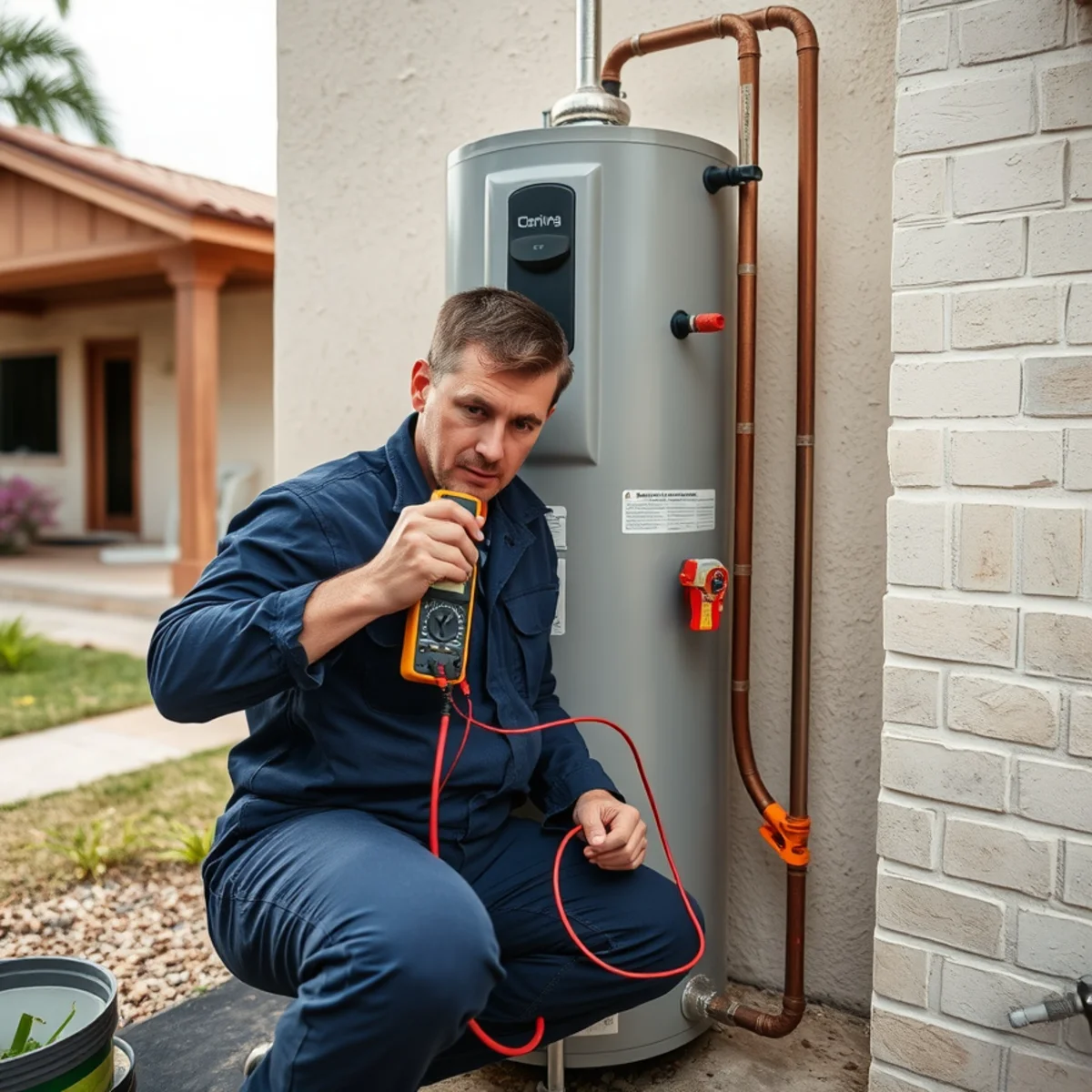
The technician checks the accessible system, tests the likely causes, and explains what the evidence shows before recommending work.
Repair the failed component or install the approved replacement
After you approve the written scope, the repair or installation is completed with attention to clean connections, safe operation, and the surrounding property.
Verify and explain
We operate the system, check for leaks or restored flow, clean the work area, and explain practical steps that may help prevent a repeat problem.
Building access and project coordination
distance between meter, home, and public connection may make locating and access a larger part of the job. Those practical conditions can control when the system is isolated, where equipment can travel, how finishes are protected, and which party authorizes work.
A detached home may require tracing beneath a slab or through a landscaped yard. A condo may need management documents, a service elevator, a riser shutdown, neighbor access, and clear unit-versus-association responsibility. A business may require after-hours service, containment, customer-area protection, and a documented reopening test.
Permit requirements are determined by jurisdiction and scope. Before regulated work starts, the proposal should state who pulls the permit, who meets the inspector, what testing is included, and which restoration remains outside the plumbing scope.
What affects the estimate?
There is no honest one-price answer without seeing the system. For this service, the estimate responds to the evidence, safe access, materials, equipment, code path, restoration, and whether the problem is isolated or extends into shared or concealed piping.
- Tank or tankless equipment type and capacity
- Gas, electrical, venting, and water-line conditions
- Access in a closet, garage, condo, or roof area
- Permit and municipal inspection requirements
- Drain pan, shutoff, expansion, disposal, and finish work
Ask each contractor to define the same boundaries: diagnosis, labor, material, equipment, permits, inspection, cleanup, debris removal, finish restoration, and post-work verification. That makes proposals comparable and reduces change-order surprises.
Is the Homestead no-hot-water call a heater failure, a water-supply problem, or an outage?
Compare cold and hot flow at several fixtures and confirm the serving water and energy utilities first. Normal cold flow with no heat points toward the heater, its energy source, controls or hot-water distribution; low or absent cold and hot flow across the property can involve a public-water interruption or, on a verified private-well system, the pump or pressure equipment. One affected shower can remain a fixture-level problem.
The service address matters because the City of Homestead is surrounded by unincorporated Miami-Dade, and a Homestead mailing address does not prove City limits, Homestead Energy Services electric service, City water service or a private well. Check the utility bill, meter, outage notice, known well and pump components, and property records rather than assigning the source from ZIP code, lot size or proximity to the Redland edge. If cold pressure is normal throughout the property, electric storage diagnosis can move to the available supply, breaker or disconnect, high-limit control, thermostats and upper or lower elements; do not repeatedly reset a breaker that trips again. Gas equipment adds confirmed fuel, ignition, burner and control operation, combustion air and venting. Tankless and heat-pump equipment add model-specific flow, error, filter, fan, sensor and condensate checks. Trace water at the heater to its cold inlet, hot outlet, connector, shutoff, drain valve, temperature-and-pressure relief discharge, pan, condensate line, tank body or another pipe before calling the tank failed. Do not cap a relief discharge, cross standing water to reach electrical equipment or energize wet equipment. If gas odor is present, leave without using switches or flames and follow the serving utility or emergency instructions.
What evidence separates a repairable Homestead water heater from a replacement or supply-system problem?
Repair is strongest when the tank or heat exchanger is sound, one supported component explains the failure, demand remains adequate and the surrounding water, energy, venting and drainage systems can operate safely. Replacement is stronger when the pressure vessel leaks, corrosion is extensive, failures repeat, essential parts are unavailable, or the existing equipment no longer fits demand or installation conditions. A utility, well-pump or pressure fault requires its own scope.
Record the rating plate, model and serial number, fuel, storage volume or flow rating, input or wattage, documented installation date, service history, current error, exact leak source and visible vessel condition. A failed thermostat, element, supported control, ignition component, connector or drain valve presents a different decision from water emerging through a corroded tank seam or damaged heat exchanger. Age provides context, not an automatic replacement date or percentage formula. Water source also needs evidence. Homestead publishes a report for the public water it supplies, Miami-Dade operates other South Dade public systems, and a documented private well follows different pump, pressure, testing and treatment responsibilities. Sediment, discoloration or scale should be tied to inspection and, where relevant, current water testing—not blamed generically on every Homestead supply. On a verified well property, unstable pressure, air, sediment or pump cycling can affect heater filling, tankless activation and delivered flow, but replacing the heater does not repair the well, pump, pressure tank or treatment equipment. A component repair likewise does not correct undersizing, a blocked relief route, closed-system expansion issue, unsuitable pan or condensate path, inadequate gas or electrical capacity, deficient venting or inaccessible equipment. The comparison should define what is repaired, what remains, replacement and utility work, permit/inspection responsibility, removal and finish work, and the closeout test without inventing price, timing, warranty coverage or remaining life.
How should Homestead demand, equipment fit, property access, and permits be planned?
Lock the exact jurisdiction, serving utilities, busiest hot-water period, equipment rating, fuel or circuit, dimensions, drainage, venting or airflow, service clearance, removal route and permit path before ordering a replacement. A City home, an unincorporated Homestead mailing address, a townhome, a large-lot house and a business can follow different approval, utility, access and demand conditions even when they share a ZIP reference.
Historic Downtown properties, ranch homes, newer communities and large-lot houses in ZIP references 33030, 33033 and 33035 can serve different fixture counts and operating patterns. Storage selection should use the busiest demand period, first-hour rating and recovery; Uniform Energy Factor compares efficiency among otherwise suitable models. Tankless selection uses simultaneous gallons per minute and temperature rise plus the electrical service or confirmed gas capacity, combustion air, venting and condensate provisions behind its rating. An integrated heat-pump model needs the manufacturer’s free-air or approved ducting approach, intake and exhaust clearance, filter and control access, condensate route, electrical support, and a location where sound and cool discharge are acceptable. A warm climate does not make a tight closet or unverified exterior room suitable. Where a site has a gate, long driveway, detached guest area, utility room or separate outbuilding, confirm which structure and meter the heater serves, the protected equipment route, doorway and turn dimensions, parking, animals or agricultural activity, shutdown notice, disposal route and future service access rather than assuming a standard garage swap. Association or tenant authorization may apply in townhomes and occupied properties. The City lists residential water-heater replacement as eligible for its expedited review program, but eligibility is priority review rather than guaranteed approval or installation time. Because some Homestead postal addresses lie outside City limits, confirm the permitting authority first; relocation, capacity or fuel changes and related plumbing, electrical, gas, building or County agency work can add review and inspection scope.
What should storm-aware startup and closeout prove in Homestead?
After a storm or outage, confirm the serving electric and water systems are restored, the access area is safe, and the heater, wiring, controls, gas components and connections were not exposed to flooding or damaging surge conditions. Closeout should then prove the approved model and fuel, complete connections, a filled and purged storage tank before electric energizing, dry operation, controlled startup, verified hot-water delivery and unobstructed relief and drainage paths.
Homestead Energy Services provides its own outage-reporting path for customers it serves, while another address may use a different electric provider; a documented private well may also need pump power and stable pressure before the heater can fill or a tankless unit can activate. Do not use heater controls to test an unresolved utility interruption, energize wet or empty equipment, repeatedly reset protection, approach downed conductors, or connect a portable generator into building wiring without an approved transfer arrangement and qualified electrical scope. Once conditions are safe, a storage heater should be filled and air purged through hot outlets before electric heat is applied. Inspect disturbed cold and hot connections, shutoff, drain, relief connection, pan and condensate route; observe the controls through an appropriate operating sequence; and verify delivered temperature and recovery within the authorized test. Gas equipment adds its listed fuel connection, combustion-air and venting startup. Tankless or heat-pump equipment adds current error status, tested flow, intake and exhaust, filter or fan access and condensate checks. Record the diagnosed failure, component or model installed, rating-plate match, settings, model and serial information, utility and water-source observations, permit and inspection status, supplied manuals, old-equipment handling, and any pump, well, electrical, gas, building, landscape or finish work left outside scope. A short test confirms only the system and conditions actually observed.
Technical terms in a useful diagnosis
tank water heater, electric element, gas burner, thermostat, thermocouple, and expansion may appear during this service. Each term should be tied to a measurement, image, component, or repair decision—not used as a substitute for plain language.
- tank water heater
- electric element
- gas burner
- thermostat
- thermocouple
- anode rod
- sediment
- T&P relief valve
- drain pan
- expansion
Continue with the full service and city guides
Read the complete water heater repair guide for Miami for deeper process, pricing-factor, and FAQ coverage. The Homestead plumbing guide explains additional housing, ZIP, permit, and access context.