
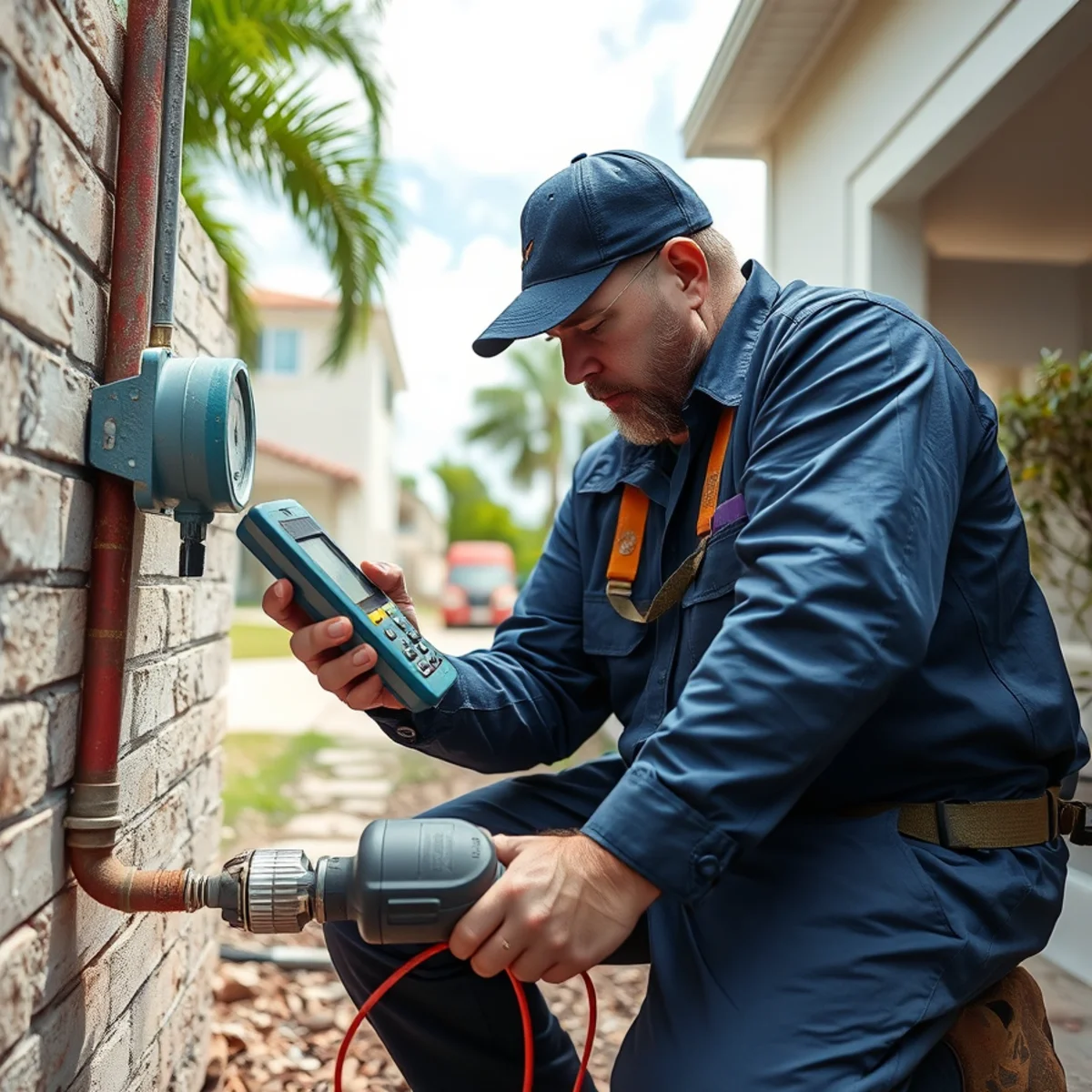
Service and place, considered together
Why leak detection in Miami Gardens needs a local plan
Miami Gardens properties around Hard Rock Stadium, NW 27th Avenue, Carol City, and Bunche Park include postwar homes, newer infill, apartments, schools, retail, and event-related commercial properties. For leak detection, that building mix changes access, ownership boundaries, pipe routes, shutdowns, and the evidence needed before a lasting recommendation.
Miami’s slab-on-grade homes, high humidity, porous materials, and high water table can make moisture confusing. A damp area is not automatically a pressurized leak, and a moving meter is not automatically under the slab. Isolation separates plumbing loss from condensation, roof intrusion, irrigation, drain leaks, and appliance problems.
In this part of Miami-Dade, mixed pipe materials, slab leaks, drain backups, exterior water lines, and high-use fixtures all occur. That does not mean every property has an age-related or climate-related failure. It means the technician should test the likely causes in a deliberate order and show why a particular cleaning, repair, or replacement belongs in the scope.
Problems that justify a closer look
One symptom is not a diagnosis. The most useful clues are which fixtures or equipment are affected, whether the problem is constant or intermittent, how quickly it returned after prior work, and whether neighboring units or exterior areas react at the same time.
- The water meter moves when fixtures are off
- A water bill rises without a clear reason
- Flooring feels warm, damp, or discolored
- Pressure drops or a pump cycles unexpectedly
- Paint, drywall, cabinets, or ceilings show moisture
Photographs, equipment labels, previous invoices, camera footage, leak history, and building notices can shorten the appointment. If active water is near electricity, sewage is entering an occupied area, or gas odor is present, move to safety first and explain the condition when calling.
Our Miami Gardens service process
The work moves from protection and diagnosis through an approved scope, completion, and verification. The tools change with the system; the responsibility to explain findings before expanding work does not.
Listen and protect the work area
We start with the symptoms you have noticed, protect nearby floors and finishes, and identify any immediate shutoff or containment step.
Isolate fixtures, hot/cold branches, and likely leak zones
The technician checks the accessible system, tests the likely causes, and explains what the evidence shows before recommending work.
Open and repair only after the evidence narrows the source
After you approve the written scope, the repair or installation is completed with attention to clean connections, safe operation, and the surrounding property.
Verify and explain
We operate the system, check for leaks or restored flow, clean the work area, and explain practical steps that may help prevent a repeat problem.
Building access and project coordination
event traffic, occupied homes, municipal permits, and commercial scheduling affect service logistics. Those practical conditions can control when the system is isolated, where equipment can travel, how finishes are protected, and which party authorizes work.
A detached home may require tracing beneath a slab or through a landscaped yard. A condo may need management documents, a service elevator, a riser shutdown, neighbor access, and clear unit-versus-association responsibility. A business may require after-hours service, containment, customer-area protection, and a documented reopening test.
Permit requirements are determined by jurisdiction and scope. Before regulated work starts, the proposal should state who pulls the permit, who meets the inspector, what testing is included, and which restoration remains outside the plumbing scope.
What affects the estimate?
There is no honest one-price answer without seeing the system. For this service, the estimate responds to the evidence, safe access, materials, equipment, code path, restoration, and whether the problem is isolated or extends into shared or concealed piping.
- Diagnostic time and number of zones
- Location beneath slab, wall, ceiling, yard, or equipment
- Hot-water versus cold-water branch
- Access and finish protection or restoration
- Whether rerouting is safer than a direct repair
Ask each contractor to define the same boundaries: diagnosis, labor, material, equipment, permits, inspection, cleanup, debris removal, finish restoration, and post-work verification. That makes proposals comparable and reduces change-order surprises.
What should the meter, utility boundary, and property authorization prove in Miami Gardens?
Confirm the serving account and meter before assigning the loss. A controlled no-use check can show water registered while identified users were inactive; house-valve or branch isolation can narrow customer-side service versus indoor piping. Neither result locates a slab leak. Rentals, master-metered buildings, schools and commercial sites also require an authorized person to control shared valves and access.
Record the meter register or flow indicator, start and finish time, known automatic users, valve positions and who controlled the test. Toilets, ice makers, dishwashers, washing machines, water heaters, filters, irrigation, pool fill, hose connections and scheduled equipment can create legitimate or intermittent demand. Miami-Dade WASD currently recommends a two-hour no-use comparison and, where the accessible house valve can be operated safely, another comparison with that valve closed. Continued registration may move the investigation toward the customer-side service or an outdoor connection between the meter and building; stopped registration may move it indoors. A valve that does not fully close or an unrecorded user can change that inference. WASD says its maintenance boundary extends through the meter box, but the exact Miami Gardens address, account and current provider should be verified before using that rule or routing a public-side incident. A leaking meter, hydrant, public main, area-wide pressure loss or service interruption belongs on the serving utility’s response path, while private piping and use after the confirmed boundary require property authorization. In a separately metered Carol City or Bunche Park house, the owner may authorize the house valve and yard route. In a rental, apartment, school, retail site or event-related property near Hard Rock Stadium or NW 27th Avenue, a tenant or employee may control a fixture but not a master meter, common riser, main shutoff, neighboring space or site-wide interruption. Identify the owner, landlord, manager, facilities contact or other authorized representative, affected occupants, shutdown notice and safe reopening authority before isolation expands. Never force a utility valve, disturb a seal or assume a submeter represents the whole property.
Is the moisture from a slab or service leak, or from the yard, equipment, drainage, or weather?
Match the water to when each system operates. Pressurized supply loss may continue without fixture use; drain leakage follows controlled discharge; appliances and condensate follow equipment; irrigation and pool lines follow outdoor controls. Roof or façade entry, stormwater, swale ponding, shallow groundwater and shared-building migration can wet the same yard, floor, wall or ceiling without passing the tested meter.
Miami Gardens describes flat, low-lying terrain, near-surface rainy-season groundwater, full canals and lakes, and localized flooding when the C-8 or C-9 Canal or neighborhood drainage backs up. The City also explains that a functioning swale may pond after rain for roughly 24 to 36 hours before water infiltrates or evaporates. A wet yard after a storm is therefore a starting observation, not proof of a private water-service failure. Compare the meter and weather timeline with irrigation controller history, pool autofill or equipment, hose connections, downspout and roof discharge, swale position, nearby street drainage and whether saturation develops during dry conditions. For a house on slab, hot-versus-cold isolation, pressure behavior, acoustic listening, pipe-route tracing, tracer gas where appropriate and moisture readings can narrow a pressurized branch. A surface thermal pattern is not a view through tile or concrete and can be affected by sun, air conditioning, evaporation or nearby hot and cold lines. For a drain concern, test one fixture or branch under controlled flow and use a sewer camera only when the accessible drain interior answers the actual question. Around apartments, schools and retail properties, compare unit fixtures, air-handler condensate, roof drains, shared stacks, risers, equipment pans and neighboring spaces with management present. Water can travel along a penetration, ceiling, wall or slab edge before becoming visible. Keep pool-shell, irrigation, HVAC, roofing, façade, stormwater, groundwater, public-utility and environmental work outside the plumbing scope unless the qualified provider for that system is separately engaged. The finding should state which system was operated or isolated, what changed, what remained active, where the route is believed to run and which alternate sources remain unresolved.
How should flooding safety and repair evidence shape the Miami Gardens scope?
Keep people away from standing water, wet electrical equipment, downed wires and suspected gas hazards before testing. Once access is safe, choose targeted repair, rerouting or broader replacement from the confirmed system, route, material, recurrence and future access—not from one damp spot. Define City permits, structural openings, drying and finish restoration before work begins.
City flood guidance warns that standing or flowing water can conceal live electrical wires and other hazards. Do not cross water to reach a meter, building valve or breaker, touch wet equipment, or use an open flame where gas leakage is possible. Follow evacuation and public-safety instructions and involve the utility, emergency responders or a qualified electrician when those hazards control access. Heavy rain, an outage or flood timing does not prove the plumbing failed; preserve the storm, groundwater, roof, condensate, utility and plumbing evidence separately. After a pressurized line, drain or service segment is narrowed, map its likely route, depth, branches, observed material where accessible, prior repairs, recurrence, shutoffs, occupants and surfaces in the work path. A single reachable failure in otherwise serviceable pipe may support direct repair. A long under-slab route, repeated failures, poor future access or unsuitable adjacent condition may support a reroute or wider replacement, but locating one loss does not prove every pipe is defective. The comparison should identify what is confirmed, what remains preventive, where the new route would be supported and protected, how sizing and pressure will be preserved, and whether the old segment will be lawfully isolated. City of Miami Gardens guidance states that plumbing work is excluded from the July 2026 under-$7,500 single-family permit exemption regardless of cost. Detection itself does not settle the permit, but the resulting pipe repair, water-service work, reroute, slab or structural access, and related electrical or mechanical work need a current scope-specific City determination and required inspections. Separate plumbing from concrete, tile, terrazzo, drywall, cabinets, firestopping, landscaping, drainage, drying, microbial evaluation, electrical work and final finishes in writing. Before reopening an occupied rental, school, shop or event-related site, identify which system and spaces were tested, who accepted restoration limits and which hazards or closures remain.
What should closeout records prove for a manager, WASD, or insurer?
Closeout should repeat the evidence that established the leak and identify the exact system, access, repair, materials and test conditions. Preserve dated meter readings, photos, invoices, permit status and unresolved drying or restoration. Those records support a landlord, manager, utility or insurer review; they do not guarantee responsibility, reimbursement, coverage or a water-bill adjustment.
Match verification to the original symptom. Recheck a no-use meter or isolated pressure comparison when it established pressurized loss; operate the repaired fixtures or appliances under controlled conditions; inspect disturbed joints; test the relevant drain segment; and observe whether the original moisture area stops receiving new water. Existing wet materials can remain damp after the plumbing source is repaired, so record residual readings and refer drying or material evaluation without calling persistent moisture proof that the pipe still leaks. The report should identify the meter or submeter observed, account or provider information supplied by the client, valves operated, units or branches included, exact source and repair location, verified pipe material and connections, access opened, repair or reroute boundary, test duration and pressure or flow conditions where applicable, before-and-after photos, permit and inspection status, surfaces awaiting restoration and every area that could not be inspected. In a rental or managed property, provide the authorized representative a shutdown and reopening record and note tenant, neighboring-unit, school, business or event-area limitations. Miami-Dade WASD’s current concealed/underground-leak process can require completed final repair, a signed request, timely submission, a detailed invoice or repair statement, before-and-after photos, payment and possible inspection or access. Pool, irrigation, fixture use and other causes can receive different treatment. The account holder should confirm the current provider and requirements; a plumber cannot approve a credit. An insurer separately applies the policy, cause, notice, inspection and coverage terms, while a landlord or manager applies the lease and property records. Keep utility-side problems, City stormwater or swale conditions, roof/façade, irrigation/pool, HVAC, electrical, structural, drying and finish responsibilities clearly unresolved until the appropriate party completes them.
Technical terms in a useful diagnosis
water meter, pressure test, acoustic listening, thermal imaging, moisture meter, and tracer gas may appear during this service. Each term should be tied to a measurement, image, component, or repair decision—not used as a substitute for plain language.
- water meter
- pressure test
- acoustic listening
- thermal imaging
- moisture meter
- isolation test
- slab leak
- supply line
- pinhole leak
- tracer gas
Continue with the full service and city guides
Read the complete leak detection guide for Miami for deeper process, pricing-factor, and FAQ coverage. The Miami Gardens plumbing guide explains additional housing, ZIP, permit, and access context.