
Service and place, considered together
Why water heater repair in Doral needs a local plan
Doral properties around Downtown Doral, CityPlace, Miami International Mall, warehouses, hotels, and golf communities include newer condos, planned communities, hotels, restaurants, offices, and extensive industrial property. For water heater repair, that building mix changes access, ownership boundaries, pipe routes, shutdowns, and the evidence needed before a lasting recommendation.
Miami’s warm climate does not eliminate water-heater stress: mineral deposits, humid utility spaces, salt exposure near the coast, tight condo closets, and permit requirements all affect the job. Replacing only the tank may be insufficient if the pan, shutoff, vent, gas sizing, or electrical connection also needs correction.
In this part of Miami-Dade, construction defects, high-use commercial drains, water heaters, grease lines, backflow, and hidden leaks differ from older-city issues. That does not mean every property has an age-related or climate-related failure. It means the technician should test the likely causes in a deliberate order and show why a particular cleaning, repair, or replacement belongs in the scope.
Problems that justify a closer look
One symptom is not a diagnosis. The most useful clues are which fixtures or equipment are affected, whether the problem is constant or intermittent, how quickly it returned after prior work, and whether neighboring units or exterior areas react at the same time.
- No hot water or water turns cold too soon
- Water collects beneath the tank or at a connection
- The unit pops, rumbles, or cycles unusually
- Hot water is rusty or has an odor
- A breaker trips or a gas unit will not ignite
Photographs, equipment labels, previous invoices, camera footage, leak history, and building notices can shorten the appointment. If active water is near electricity, sewage is entering an occupied area, or gas odor is present, move to safety first and explain the condition when calling.
Our Doral service process
The work moves from protection and diagnosis through an approved scope, completion, and verification. The tools change with the system; the responsibility to explain findings before expanding work does not.
Listen and protect the work area
We start with the symptoms you have noticed, protect nearby floors and finishes, and identify any immediate shutoff or containment step.
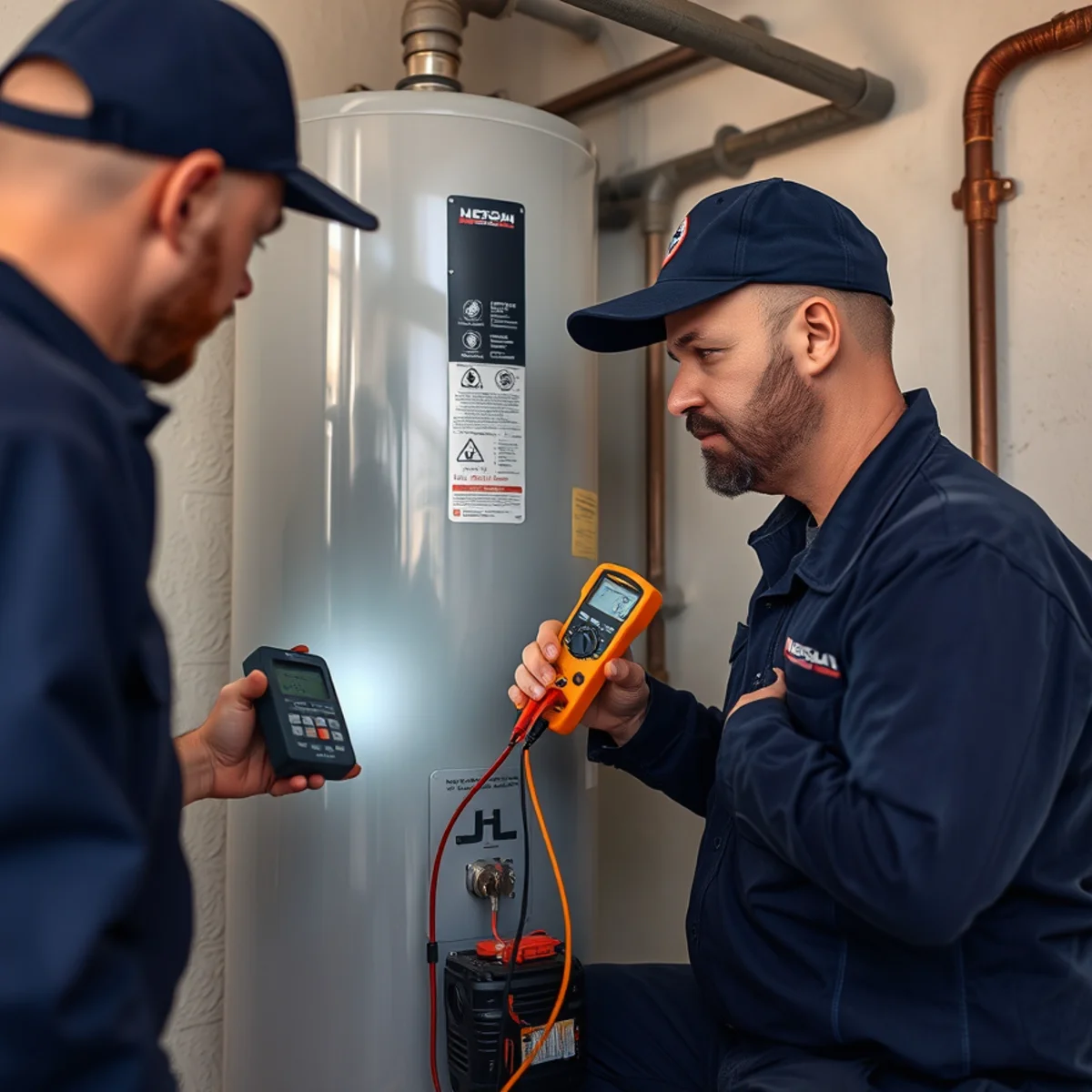
Test the heater, controls, connections, and safety devices
The technician checks the accessible system, tests the likely causes, and explains what the evidence shows before recommending work.
Repair the failed component or install the approved replacement
After you approve the written scope, the repair or installation is completed with attention to clean connections, safe operation, and the surrounding property.
Verify and explain
We operate the system, check for leaks or restored flow, clean the work area, and explain practical steps that may help prevent a repeat problem.
Building access and project coordination
security desks, loading areas, business continuity, municipal permits, and association approval require coordination. Those practical conditions can control when the system is isolated, where equipment can travel, how finishes are protected, and which party authorizes work.
A detached home may require tracing beneath a slab or through a landscaped yard. A condo may need management documents, a service elevator, a riser shutdown, neighbor access, and clear unit-versus-association responsibility. A business may require after-hours service, containment, customer-area protection, and a documented reopening test.
Permit requirements are determined by jurisdiction and scope. Before regulated work starts, the proposal should state who pulls the permit, who meets the inspector, what testing is included, and which restoration remains outside the plumbing scope.
What affects the estimate?
There is no honest one-price answer without seeing the system. For this service, the estimate responds to the evidence, safe access, materials, equipment, code path, restoration, and whether the problem is isolated or extends into shared or concealed piping.
- Tank or tankless equipment type and capacity
- Gas, electrical, venting, and water-line conditions
- Access in a closet, garage, condo, or roof area
- Permit and municipal inspection requirements
- Drain pan, shutoff, expansion, disposal, and finish work
Ask each contractor to define the same boundaries: diagnosis, labor, material, equipment, permits, inspection, cleanup, debris removal, finish restoration, and post-work verification. That makes proposals comparable and reduces change-order surprises.
Is the Doral hot-water problem inside one fixture, one tenant space, or the central system?
Map the symptom across fixtures, suites, floors and operating zones before opening equipment. One cold shower or sink can involve a cartridge, limit setting, local mixing device or crossover; one tenant space can involve its branch or in-unit heater; and several areas changing together can involve staged equipment, a central plant, recirculation, mixing, a pressure zone, a managed shutdown or a utility interruption.
That boundary matters across Downtown Doral condos, CityPlace hotels and restaurants, office and retail properties near Miami International Mall, warehouse districts in 33166 and 33178, and managed golf communities. Confirm whether the property uses one electric or gas storage heater, a tankless unit, an integrated heat-pump model, multiple staged heaters, a tankless rack, central storage plus heating equipment, or another documented arrangement. Ask which fixtures, tenant suites, guest rooms, kitchens, laundry areas, floors or pressure zones are affected; whether the symptom changes during peak use; and whether a recirculation pump, return-temperature control, mixing valve, energy source or building water service reports a fault. Long wait at a distant fixture can involve the dedicated return, pump, check valve, balancing, sensor or control rather than insufficient heater output. Temperature swings can involve a fixture device, crossover, unstable flow or central mixing control. Visible water also needs source tracing to the cold inlet, hot outlet, connector, shutoff, drain, temperature-and-pressure relief discharge, pan, condensate, vessel, shared riser or nearby system. Do not cap a relief discharge, repeatedly reset protection, cross standing water to reach energized equipment or treat a gas odor as a water-only repair. The actual equipment, piping, controls and affected users establish the diagnostic boundary before repair or replacement is proposed.
What evidence supports repairing or replacing a Doral high-demand water-heating system?
Repair is strongest when the tank or heat exchanger is sound, a supported component or control explains the failure, demand remains adequate and the surrounding system can operate safely. Replacement or a defined system upgrade is stronger when vessels leak, corrosion is extensive, failures recur, critical parts or instructions are unavailable, or the installed capacity, recovery, redundancy, utilities or distribution controls no longer fit actual use.
Inventory every connected unit rather than copying one nameplate: record model and serial numbers, fuel, input or wattage, storage or flow rating, staging sequence, current faults, runtime or error history, previous repairs, exact leak source and visible vessel or heat-exchanger condition. A failed thermostat, element, ignition component, supported control, pump, sensor, connector or valve presents a different decision from a breached vessel or repeatedly locking-out staged system. Age offers context but not an automatic cutoff, and a temporary return of heat does not prove the pressure-containing equipment is sound. For a condo, hotel, restaurant, office, warehouse wash area or mixed-use property, compare the busiest operating period with first-hour delivery, recovery, hourly demand, simultaneous flow and temperature rise. Identify whether storage and recovery can cover the peak, whether staged units provide intended redundancy, and whether recirculation return temperature and mixing controls deliver stable tempered water without masking inadequate generation. Uniform Energy Factor and commercial thermal-efficiency ratings compare equipment within their applicable categories; the actual rating plate, listing, design and use determine which category applies. A component repair also does not correct chronic undersizing, an obstructed relief route, unsuitable expansion or drainage, deficient electrical or gas capacity, combustion-air or venting problems, inaccessible equipment, failed recirculation design or an unauthorized change to the central system. A useful comparison defines the immediate repair, unchanged conditions, replacement arrangement, related plumbing, electrical, gas or controls scope, access and shutdown work, permit and inspection path, and closeout test without inventing price thresholds, completion time, warranty eligibility or remaining service life.
How should Doral equipment fit, security, access, and shutdown be planned?
Select equipment from measured demand and prove the utility, venting or airflow, drainage, dimensions, controls and service path before ordering it. Then coordinate the authorized contact, security and vendor requirements, loading route, protected work area, shutdown window, occupant or customer notices, change approval and reopening criteria. A cabinet that fits the old footprint is not automatically a workable commercial or managed-property installation.
Storage equipment should match first-hour demand and recovery. Tankless equipment should match simultaneous gallons per minute and temperature rise plus the available electrical service or confirmed gas capacity, combustion air, approved venting and condensate requirements. Integrated heat-pump equipment adds manufacturer-specified free air or ducting, intake and exhaust clearance, filter and control access, condensate drainage, sound and cool-discharge considerations. Multiple commercial or central units add headers, isolation, staging, sensors, circulation, mixing, redundancy and a controls sequence; replacing one heater without documenting that sequence can create uneven loading or an incomplete startup. Measure the equipment, pan or base, connections, doorway, turns, corridor, loading dock, freight or service elevator and final service clearances. Confirm who can authorize isolation and restoration, which security desk or facility contact controls access, and whether the property requires vendor documentation, a purchase or work order, protected floors and inventory, or scheduled loading. Those requirements vary by property and are not represented here as guarantees or universal prerequisites. A hotel needs a guest-impact and reopening plan; a restaurant must protect kitchen and sanitation operations; an office or retailer may need customer separation; and a warehouse may need loading and production routes kept clear. Identify the affected tenant suites, kitchens, laundry areas or fixture groups, the approved outage window, notices, temporary restrictions and the person authorized to approve discovered changes before draining equipment. Reopening should follow stable generation, circulation and tempered-water delivery at representative approved fixtures—not merely the first nearby tap becoming warm.
How do Doral permit, trade, startup, and closeout boundaries work?
Confirm the exact address, occupancy, equipment, fuel, wattage, capacity, location and related trade scope with the City before relying on an exemption or starting work. Doral’s residential guide exempts repair or exact replacement of an electric water heater rated 4,500 watts or less, while different wattage needs a permit and the gas-appliance exemption excludes gas water heaters. Those provisions are not a blanket exemption for commercial, central or changed-scope work.
A relocation, capacity or fuel change, new vent, altered electrical load, gas work, structural access, central-system change or mixed-discipline project can require plumbing, electrical, gas, mechanical or building review and separate subpermit applications. The City’s current FAQ says emergency water-heater work before permit issuance normally needs Building Official approval and may proceed only to the first required inspection under that approval; urgency alone is not permission to conceal or complete uninspected work. Lock the jurisdiction, property authorization, submitted scope, permit and inspection responsibility, shutdown authority and change-control contact before work begins. At startup, completely fill a storage heater and purge air through hot outlets before applying electric heat. Inspect disturbed cold and hot connections, shutoffs, drains, temperature-and-pressure relief components and unobstructed discharge, expansion provisions, pans and condensate paths. Verify the installed rating plates and approved utilities, then observe ignition, elements, controls and staged sequencing through an appropriate model-specific cycle. Central or recirculated systems add pump direction and operation, return temperature, check and balancing conditions, mixing-control response and representative delivery tests across the authorized zones. Gas equipment adds its listed fuel connection, combustion air and venting; tankless and heat-pump systems add tested flow, intake and exhaust, filters or fans, error status and condensate. Closeout should record the diagnosed failure, installed component or equipment, model and serial information, settings, zones and fixtures tested, permit and inspection status, supplied manuals, old-equipment handling and any utility, controls, building, finish or shared-system item left unresolved. A short test proves only the equipment and conditions actually observed, not every concealed branch or an entire building.
Technical terms in a useful diagnosis
tank water heater, electric element, gas burner, thermostat, thermocouple, and expansion may appear during this service. Each term should be tied to a measurement, image, component, or repair decision—not used as a substitute for plain language.
- tank water heater
- electric element
- gas burner
- thermostat
- thermocouple
- anode rod
- sediment
- T&P relief valve
- drain pan
- expansion
Continue with the full service and city guides
Read the complete water heater repair guide for Miami for deeper process, pricing-factor, and FAQ coverage. The Doral plumbing guide explains additional housing, ZIP, permit, and access context.