
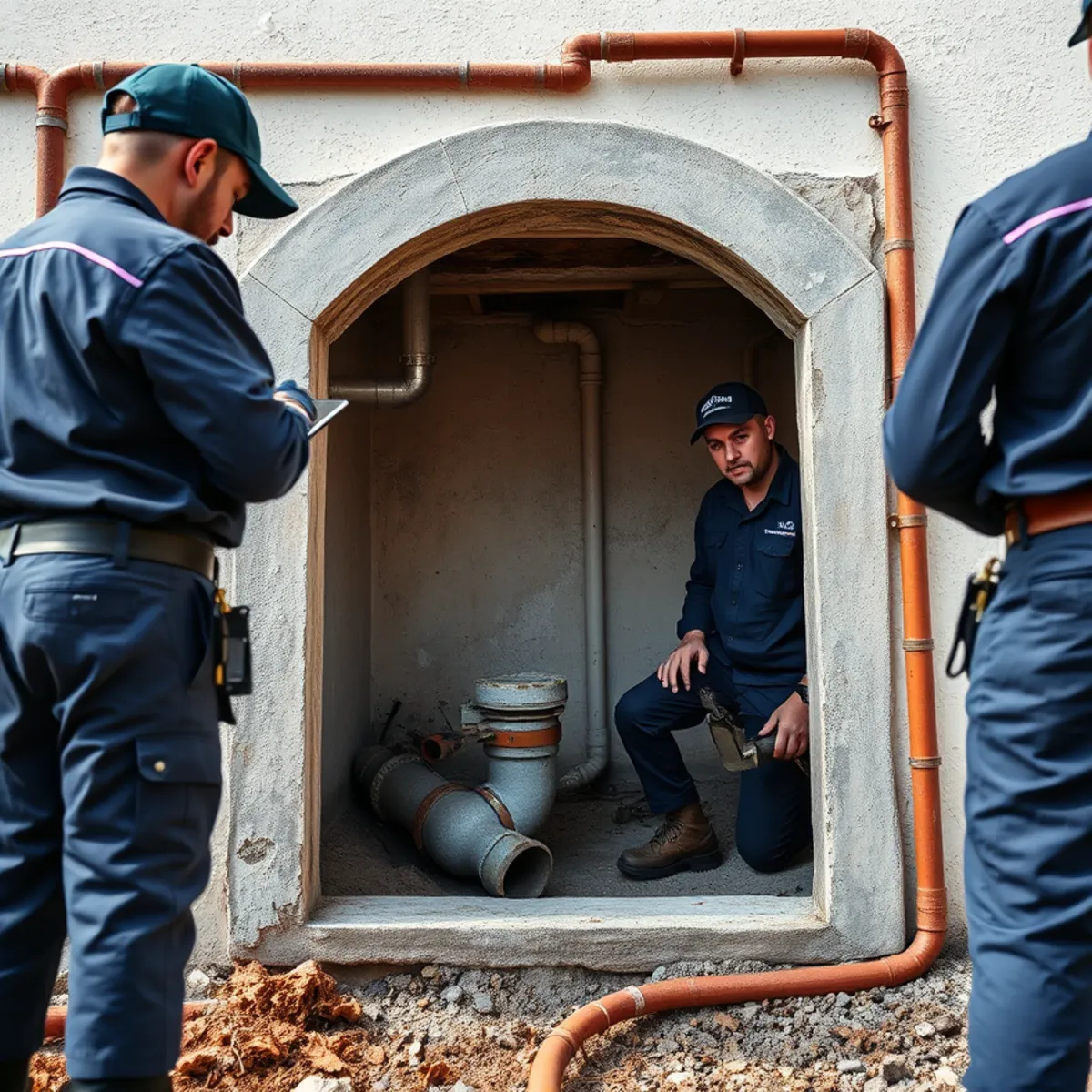
How long do cast-iron pipes last in South Florida?
Cast iron often lasts for decades, but there is no reliable expiration date. Internal wastewater exposure, humidity, soil, installation, pipe thickness, use, and prior repairs affect condition. A 50-year-old line may still flow, while a younger section can fail locally.
Age is a reason to inspect, not a substitute for inspection. Camera footage can show scaling, channeling, standing water, roots, and transitions, but it may not show every exterior leak. Combine footage with moisture, odor, backup history, and accessible pipe observations.
Can one damaged section be repaired?
Yes, a spot repair can be appropriate when one defect is confirmed and adjacent pipe remains serviceable. It is less attractive when failures occur at several locations or when reaching one section costs nearly as much as a planned larger replacement.
Ask the plumber to mark where the repair starts and ends, what material will connect to the remaining cast iron, and what evidence supports leaving the rest. Under-slab access, tile, cabinets, vertical stacks, and condo shutdowns can make the boundary a major cost decision.
Is pipe lining better than replacement?
Lining can reduce demolition when the host pipe is continuous, properly sloped, accessible, and structurally suitable. Conventional replacement is more reliable when pipe is collapsed, badly offset, missing, undersized, or unable to be cleaned and prepared.
A lining proposal should explain preparation, branch reinstatement, cure, verification, and warranty. A replacement proposal should explain slab openings, new material, slope, tests, permits, and finish restoration. Compare complete scopes rather than the headline method.
Should a Miami condo replace a whole stack?
A full-stack replacement can make sense when deterioration spans many floors, but a localized branch or joint may need only limited work. Management should review camera evidence, leak locations, riser access, shutdowns, unit protection, and restoration before choosing scope.
Vertical projects affect neighbors who may have no visible damage. Phasing, access agreements, temporary service, elevator use, and consistent finish responsibilities should be documented. The plumbing plan succeeds only when the building plan is equally clear.
Practical next steps
Record the symptom before changing the system, protect people and finishes from active water or sewage, and choose the diagnostic step that can distinguish a maintenance issue from damaged equipment or piping.
- Request camera evidence with distance and access-point notes.
- Separate drain replacement from potable-water repiping in every proposal.
- Confirm who handles permits, concrete, tile, drywall, cabinets, and painting.
- Compare the risk of repeat access against the cost of a broader planned scope.
How property type changes the decision
A pipe decision changes with location. Accessible crawlspace or wall piping can be compared directly, while under-slab branches require locating and restoration planning. Condo stacks add neighboring units, firestopping, shutdowns, and shared ownership. Exterior laterals add depth, roots, paving, landscaping, groundwater, and the municipal connection.
Before calling, make a short timeline: when the symptom started, what changed immediately before it, which fixtures or equipment react together, whether a shutoff changes it, and what prior service found. Photograph labels, connections, stains, cleanouts, or error codes without entering an unsafe area. That record helps the plumber select the first test and keeps a quote tied to the actual property.
Relevant Miami plumbing services
The following service guides explain how the diagnosis, equipment, scope, and pricing factors connect to this topic.
For additional local context, see plumbing service in Coral Gables and plumbing service in Miami Beach.
Bottom line
Repair, lining, and replacement are not interchangeable bids. They solve different pipe conditions. For an older Miami property, the most useful investment is a documented condition assessment and a scope that states exactly what is renewed, what remains, and how the result is verified.