Local plumbing context
Plumbing across Edgewater is not one building type
Properties around Biscayne Bay, Margaret Pace Park, Biscayne Boulevard, and rapidly developed tower blocks include older garden apartments, converted buildings, new high-rises, retail, and waterfront condos. A useful plumber starts by identifying which system, material, and ownership boundary is involved before recommending cleaning, repair, or replacement.
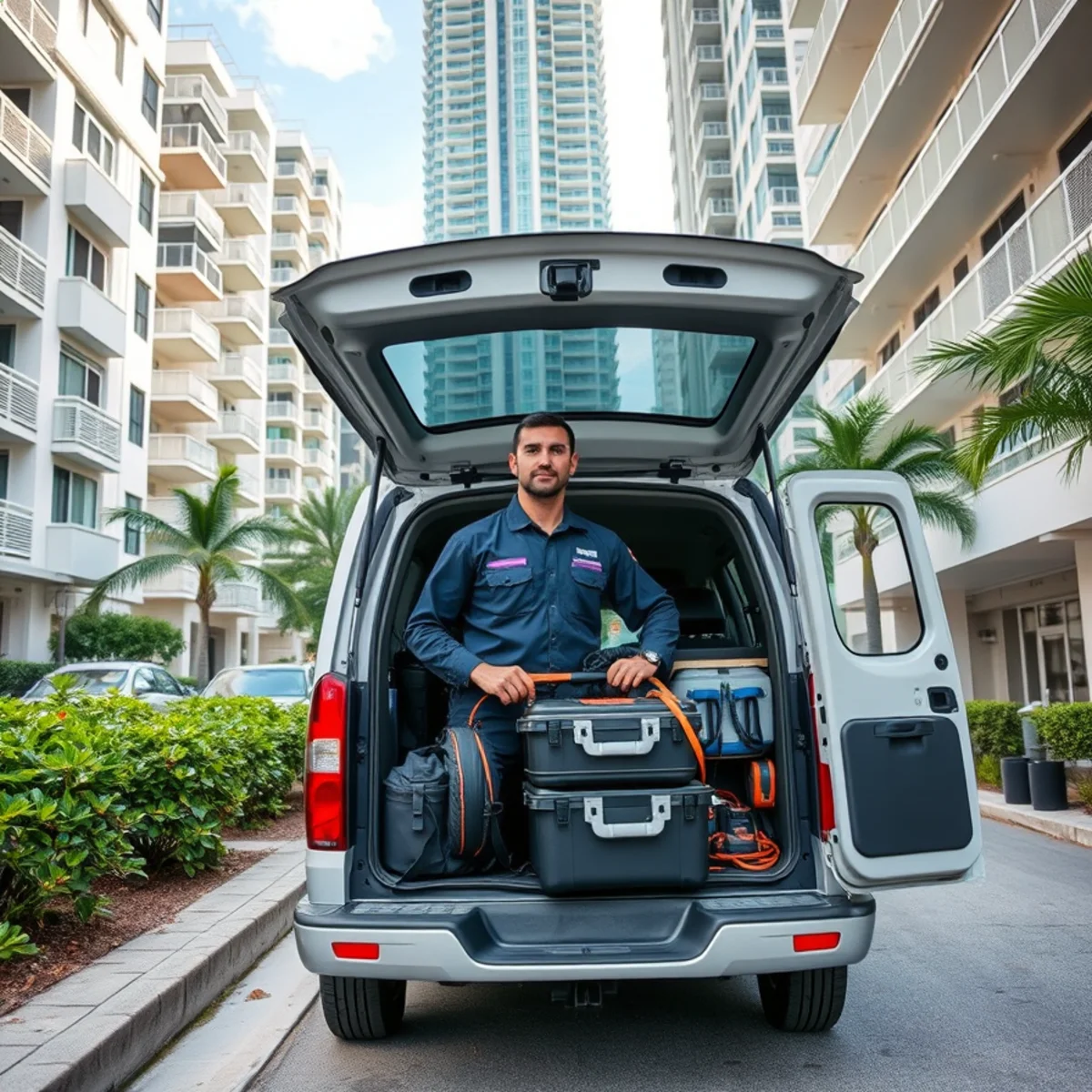
High-rise customers value precise leak tracing and disciplined coordination with management. That local fit matters because a fixture repair inside one unit, a shared condo stack, and a sewer lateral beneath a yard create very different access, approval, and restoration needs.

Housing and buildings
older garden apartments, converted buildings, new high-rises, retail, and waterfront condos.
Likely plumbing context
vertical stacks, construction transitions, unit-to-unit leaks, pressure zones, and compact equipment spaces dominate.
Access and approvals
City permits, service elevators, management, parking, and occupied-unit protection are central.
Local reference points
Biscayne Bay, Margaret Pace Park, Biscayne Boulevard, and rapidly developed tower blocks.
How we narrow a Edgewater plumbing problem
We begin with the affected fixtures, timing, building type, and visible evidence. That first pass separates a local fixture or branch problem from a building drain, pressurized supply, shared riser, appliance, or municipal-side condition.
In a single-family home, meter movement, shutoff isolation, cleanout access, slab routing, mature landscaping, and pipe age can shape the diagnosis. In a condo, the same stain or backup may cross unit boundaries; management rules, riser shutdowns, and responsibility documents become part of the service plan. Commercial calls add operating hours, customer areas, grease or process use, documentation, and business-continuity requirements.
A licensed professional should connect the recommendation to evidence. For drains, that may mean the fixture pattern, cable resistance, recovered material, or camera footage. For a leak, it may mean meter isolation, pressure behavior, moisture mapping, or opening only after the likely route is narrowed. For equipment, it means testing the unit and checking the utilities around it.
South Florida conditions that affect the scope
Older cast iron, slab-on-grade construction, tropical roots, salt exposure, high groundwater, intense rain, and piecemeal renovations all appear across South Florida, but not every factor applies to every Edgewater property.
That is why diagnosis should precede a large repair proposal. A recurring blockage can come from residue, root entry, severe internal scale, an offset, poor slope, or a failed section. Low pressure can be a clogged aerator, closed valve, regulator issue, hidden leak, scaled equipment, or supply condition. The same symptom name does not justify the same scope.
Clear estimates and project boundaries
A responsible estimate explains the affected system, proposed work, access assumptions, material, testing, exclusions, permit responsibility, and restoration. It should not hide those variables behind one price that cannot apply to every property.
For Edgewater, City permits, service elevators, management, parking, and occupied-unit protection are central. Before work, confirm who supplies building documents, who schedules shutdowns, whether a city or County permit applies, and who restores tile, drywall, cabinets, concrete, paving, or landscaping. Those details protect both the owner and the plumber from scope surprises.
Top plumbing services in Edgewater
Drain cleaning, leak detection, sewer cameras, water-heater work, fixture repair, and pipe evaluation are common starting points. The correct service depends on whether the symptom affects one fixture, several fixtures, the whole property, or a shared building system.